AND IT RAINED AND RAINED……

No trip to Edmonton could happen without a visit to cousins and West Edmonton Mall. A tightly planned and executed schedule is of utmost importance, especially when family ties and adventure await. Everything is so lush; the resplendent green after the rains has transformed the area into a picturesque landscape. It has rained a ton recently; last week, the southeast Edmonton area accumulated an astounding 177 mm in just three days. Such an incredible amount of moisture has filled the rivers to the brim, and their swift currents are a testament to nature’s power. Unfortunately, the Edmonton Dragon Boat Club was not spared; they lost their dock along with five boats that were found over 100 km downstream—a considerable loss for such an active community.

Vicki has numerous cousins in the area, many of whom she has not seen in over 30 years. The anticipation of reconnecting has been thrilling, and the scheduled meetings promise to be both nostalgic and heartwarming. On Wednesday, we had brunch with one cousin, reminiscing about days gone by, and that evening, we shared dinner with another cousin. Lunch the following day was also on the calendar with yet another family member. Each visit was a delightful experience spent exchanging stories about parents and grandparents, sharing details about each other’s children and grandchildren, and laughing together at old memories. As the visits drew to a close, there were heartfelt hugs and tears, accompanied by an unspoken realization that at our ages, there might not be another chance to gather like this again. Time flows in one direction; memory, as we all know, travels in another.

In between the visits, we squeezed in a short trip to the famous West Edmonton Mall, or WestEd, as we affectionately called it. It’s interesting how time changes perceptions. Reflecting on my memories from 30 years ago, I recall it as a thrilling adventure to visit the mall, which was once the largest shopping and entertainment complex in the world. All these years later, while the amusement park still calls to thrill-seekers with its rides, some notable attractions, like the loop-d-loop roller coaster and the Drop of Doom, are sadly long gone. I spotted the rails and loops of the coaster, now stacked in a corner, gathering dust, a mere shadow of its former glory. The submarines that once glided across the lagoon are no longer seen; gone are the days when pirates entertained the crowds high in the rigging of their ship.

The skating rink remains, although I remember it as a full-sized rink; upon closer inspection, it has actually shrunk quite a bit over the years. Instead of Edmonton Oilers players practicing, I watched figure skaters now spin and twirl gracefully across the ice, showcasing their talents. The water park and the Fantasyland Hotel continue to anchor the entertainment attractions within the mall, offering fun for families. However, the retail landscape feels less unique; the stores are largely the same as any suburban mall across Canada, with only a few specialty shops like the Lego store and some delightful Asian stores standing out as worth exploring. Our visit concluded with a delicious ice cream cone, which we indulged in while resting our feet, a small reward after tallying up 5,000 steps on the ol’ Apple Watch.

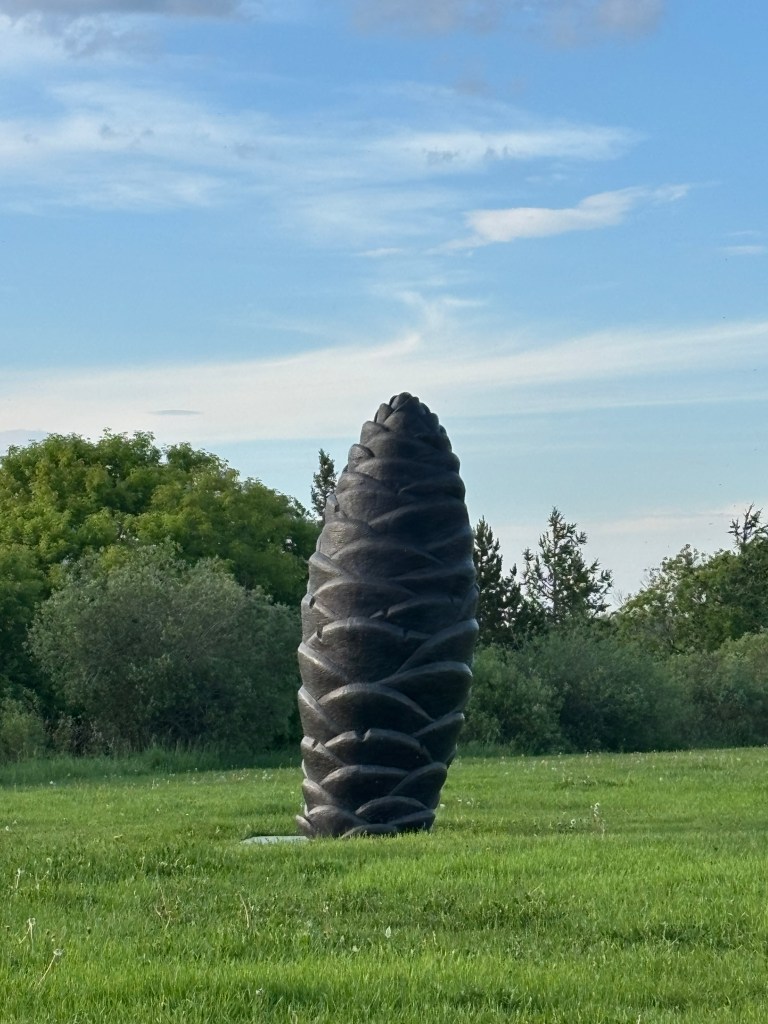
Soon it was time to be off for our next cousin visit, a joyful but bittersweet reminder that this trip was fleeting. Afterwards, we returned to our trailer for one last walk with the dog before turning in for the night. We were staying at a very active park near where we camped, where paved pathways meandered alongside the picturesque banks of the Sturgeon River that flows through St. Albert. This charming locale boasted a fantastic sculpture—a giant concrete pine cone—whose significance remains a mystery to us, yet it undeniably contributes to the area’s unique charm.

As we settled down for the night, we reflected on the day’s adventures. We’ve taken to turning in early; the fatigue of driving and pulling a trailer 400-500 kms per day catches up with us quickly. Still, despite the weariness, there’s a comforting satisfaction in the memories we create along the way. Ten o’clock has become the customary bedtime for us on this trip—an early conclusion to our bustling days. Good night all.
A NAME IMMORTALIZED

The beautiful town and national park is named after a Hudson Bay Company trading post manager and postmaster Jasper Hawes who served in his post from 1817 to 1821.During his tenure it became known as Jasper’s House. The park was officially named after the forementioned Jasper in 1907 and the town officially became Jasper in 1913.

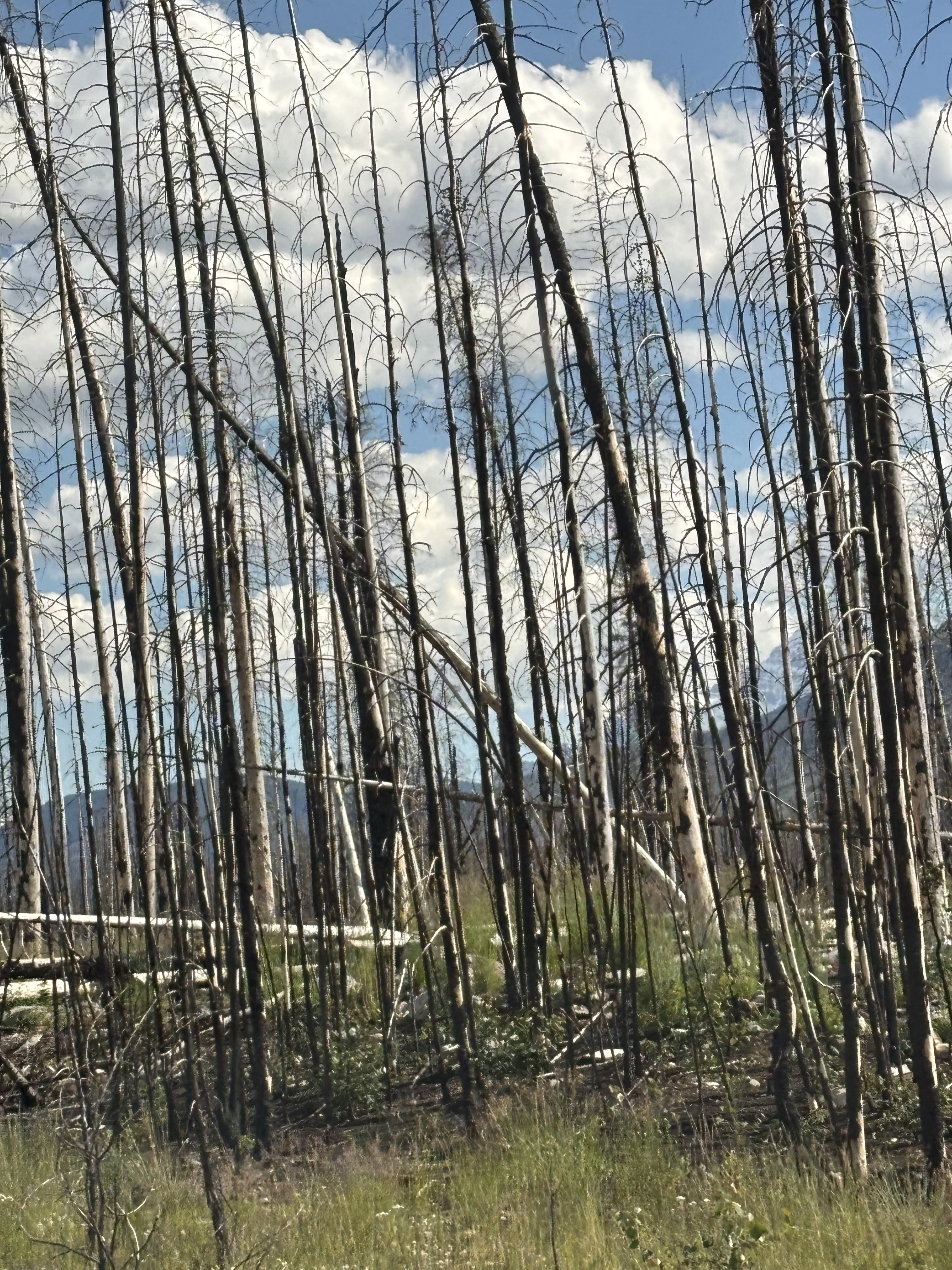
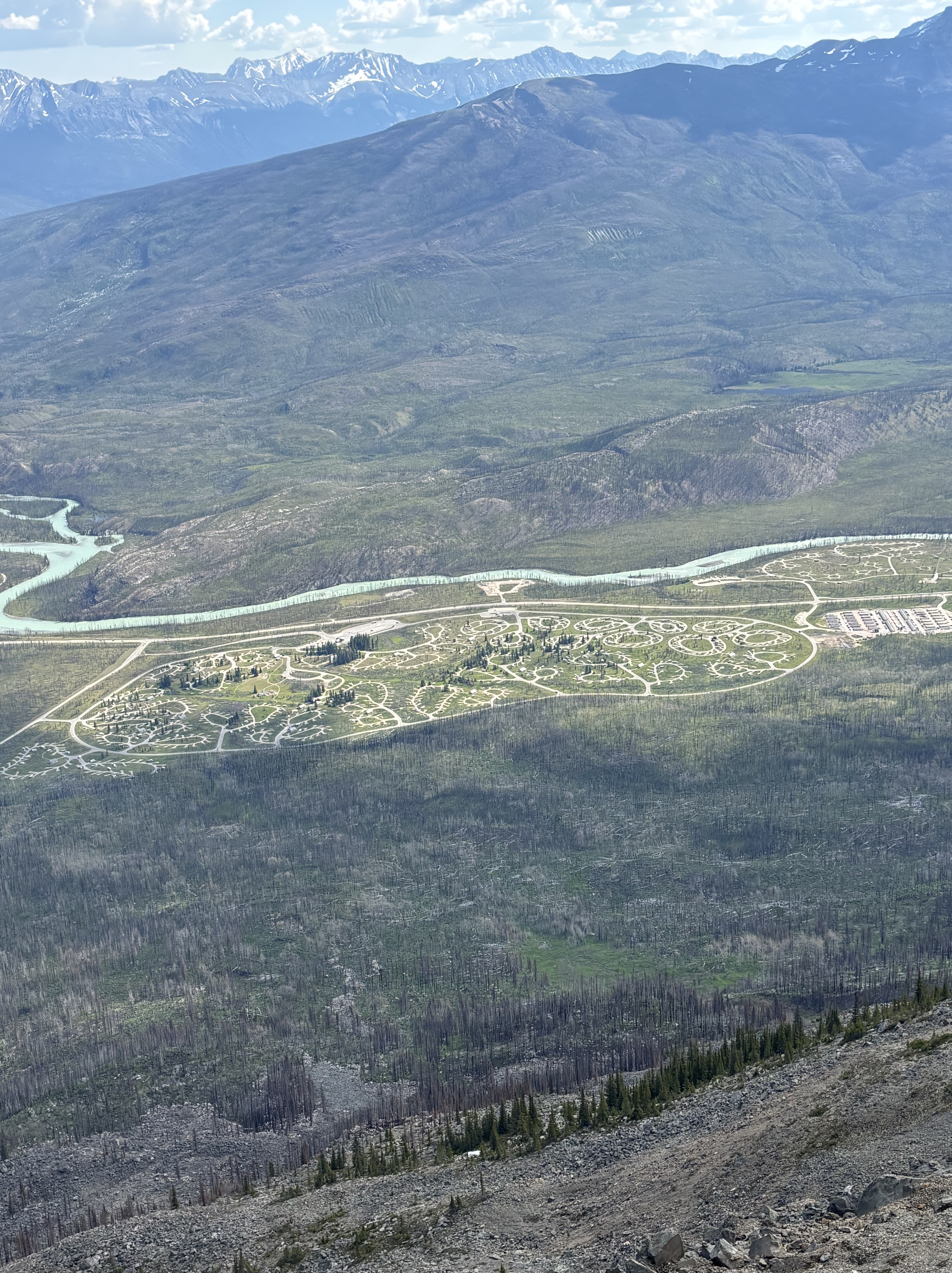
Two years ago a devastating forest fire roared through the area, destroying many buildings in the town itself. It also burned the two nearby campsites, Whistler’s and Wapiti. We are camped in Whistler’s campground, run by Parks Canada. Brand new washroom buildings have risen among the bare, blackened remnants of the aspen and spruce trees. This campsite holds about 700 sites. This night we were able to secure one of the last 50.

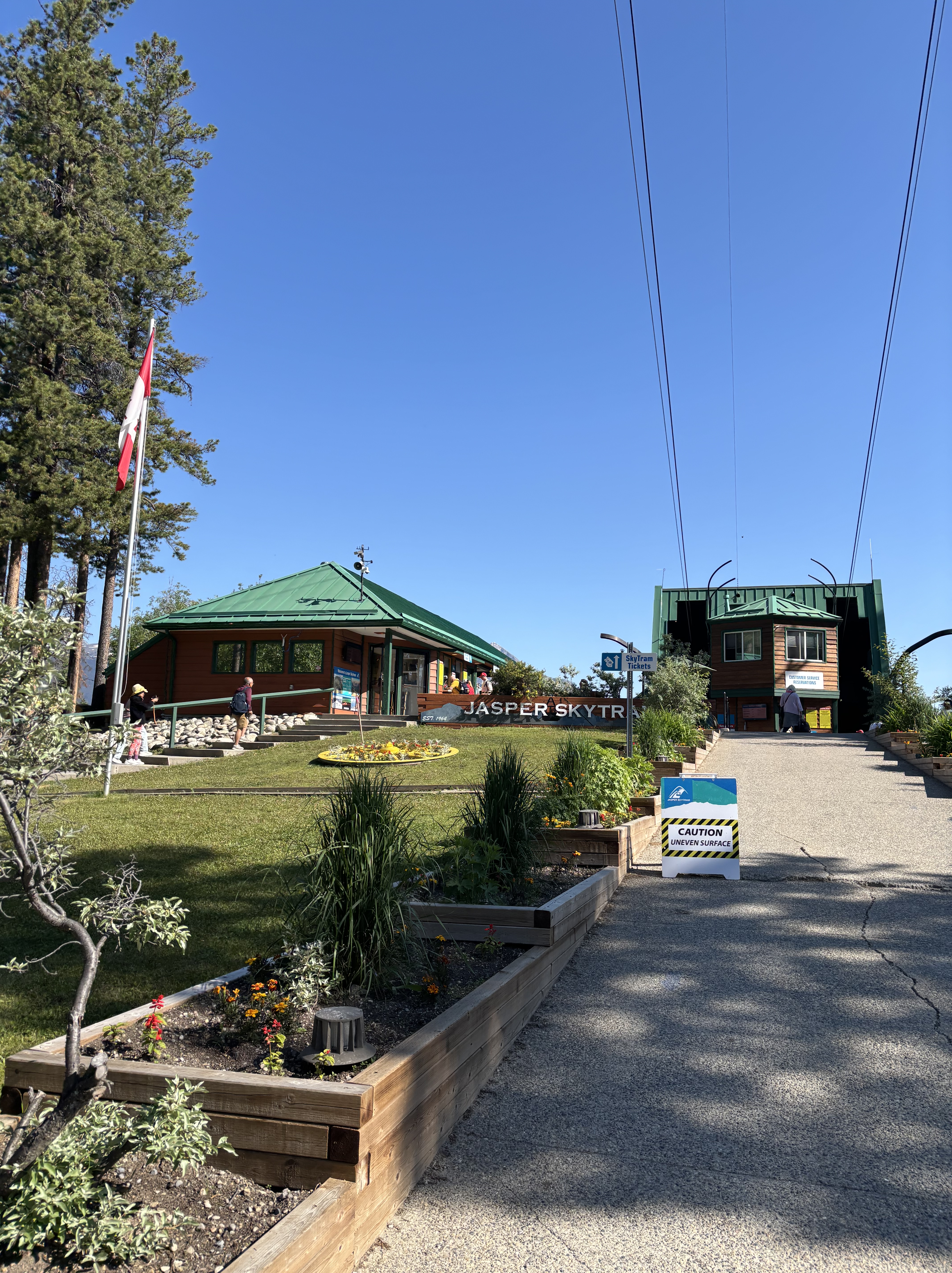
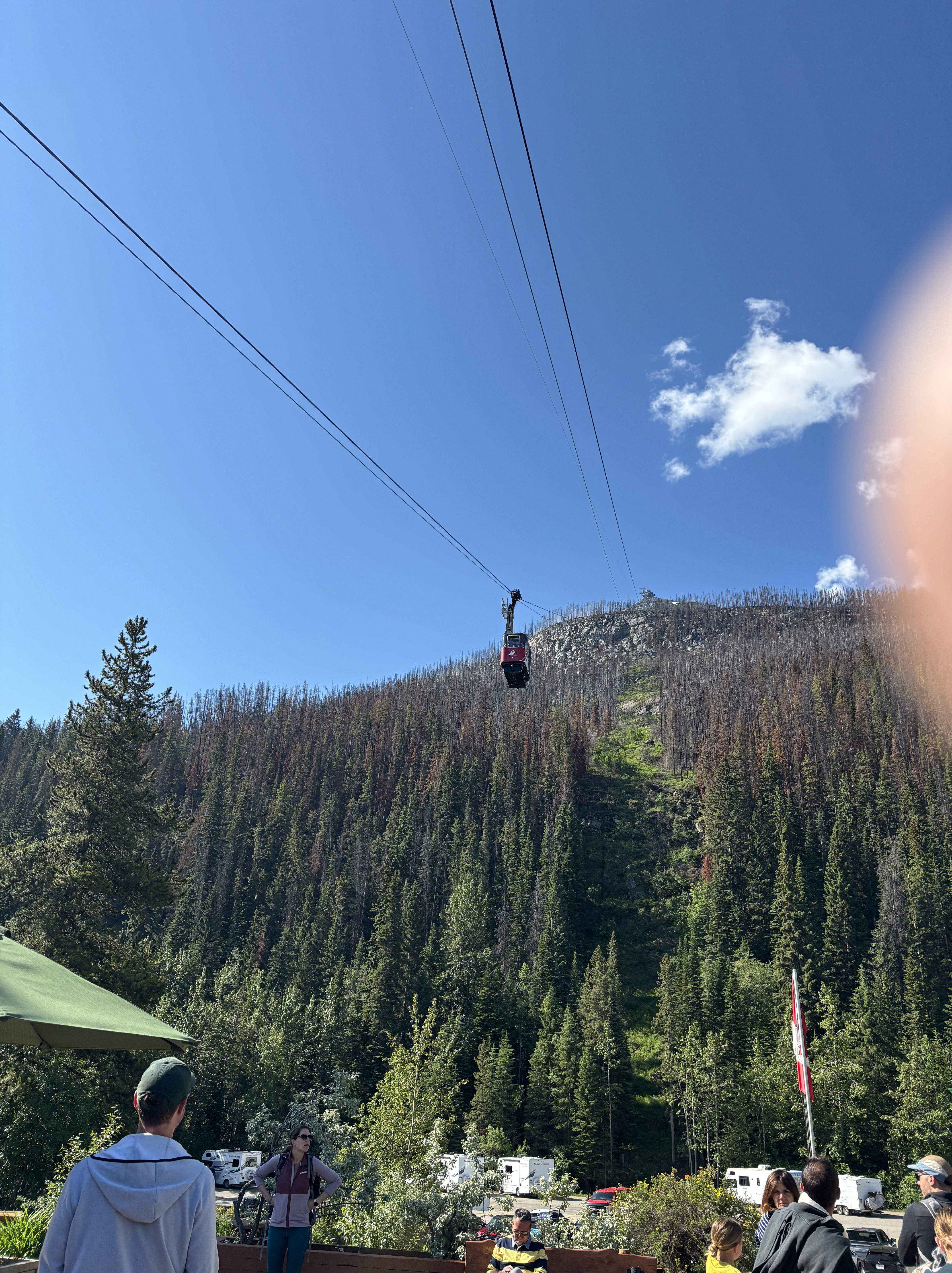
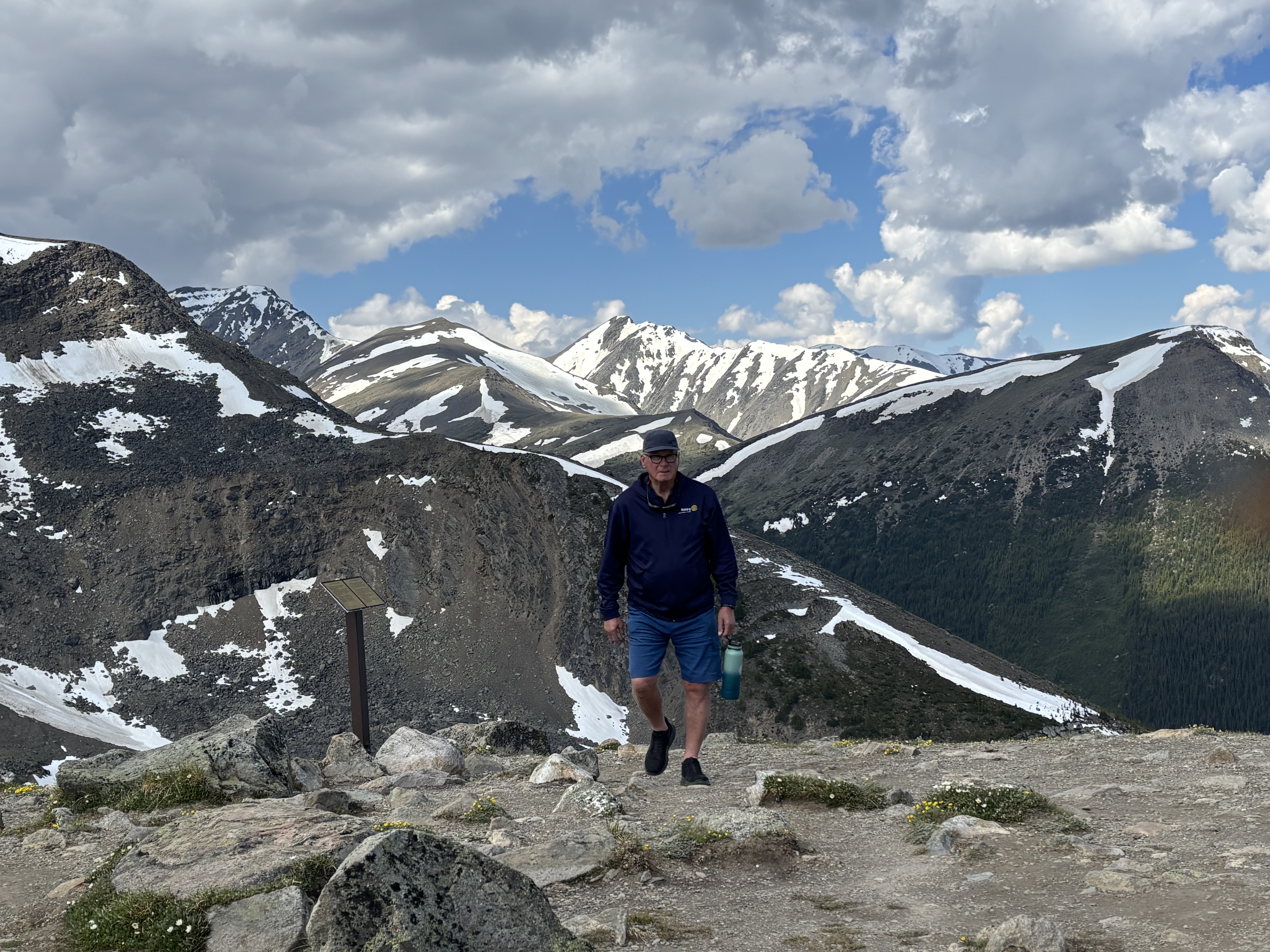
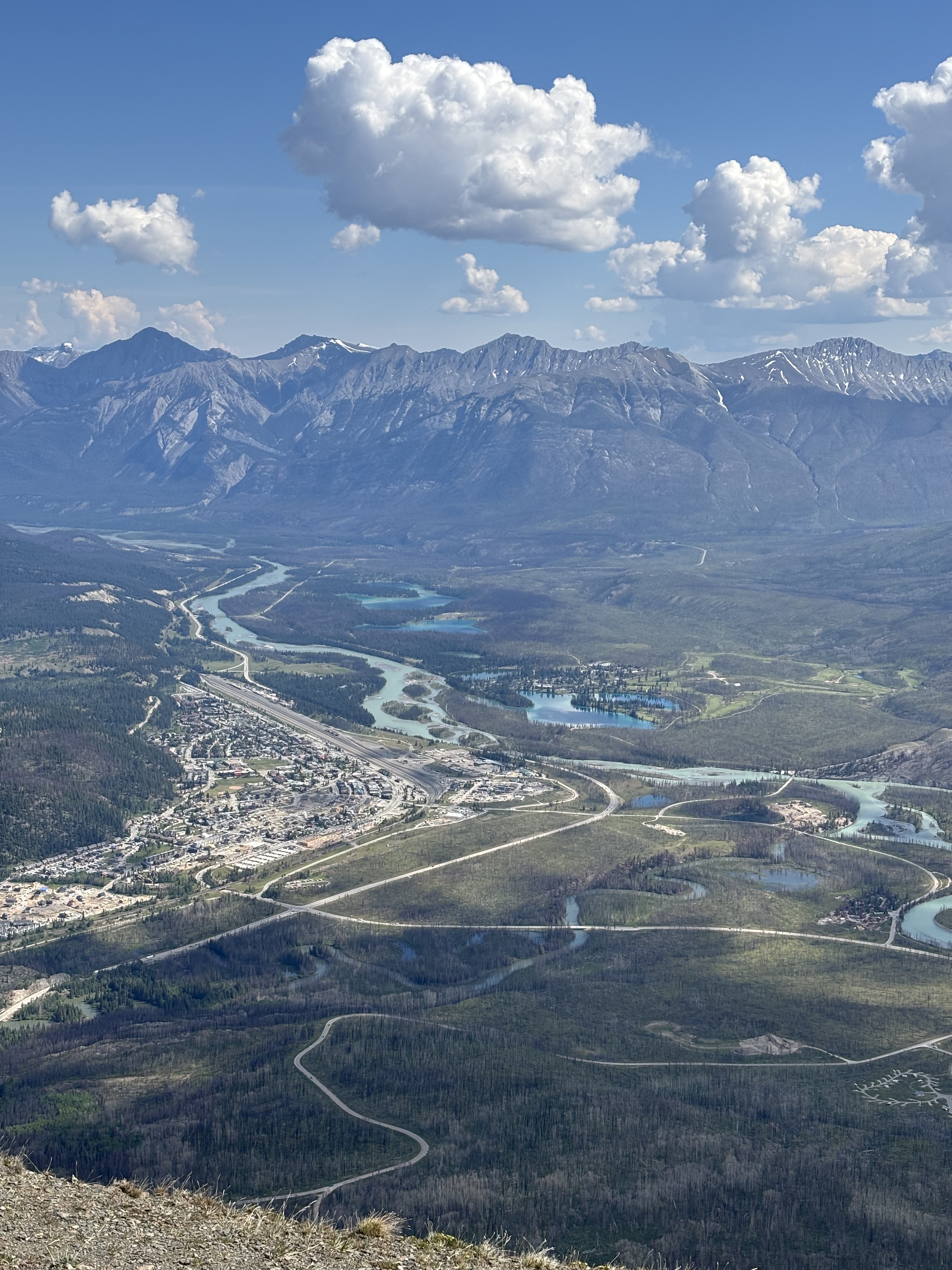
The town is a hive of building activity as the rebuild continues. New housing and commercial areas are springing up. Fortunately many of the town’s heritage buildings were spared as was the famous Jasper Park Lodge. We took a drive up to the Jasper Skytram for a look. It looked inviting so up we went to the top station at 7,425 feet above sea level. It affords incredible views up and down the Athabasca River valley and of the town site itself. We were in luck as Mt Robson was visible poking it’s head up between the peaks to the west, apparently a rare occurrance.

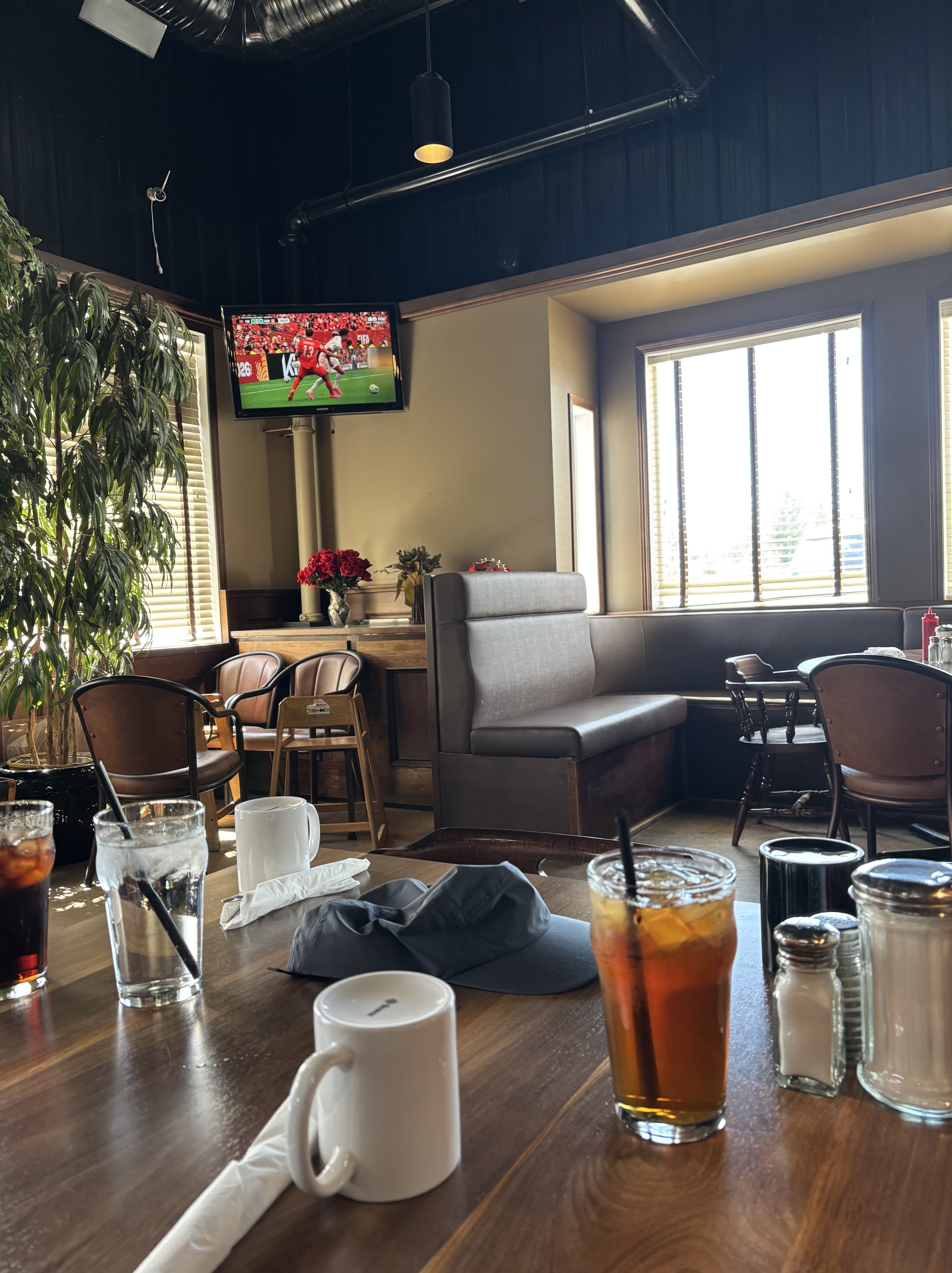
Back to the parking lot it was time to head further east. As it was “Game Day” we decided to stop in Hinton for lunch. We found a sports bar and settled in. Not too busy and the hostess had to tune the game in. Unfortunately as we know, Canada was unsuccessful. At 1-0 early in the second half I said “if Switzerland scores again, lets go”. Not long after that we were on the road again. We rolled St Albert and a really nice campground run by the Kinsmen Club of St Albert. Beautiful facility but unfortunately it is beside the Sturgeon River and with all the rain lately in this part of the country, we were eaten alive by mosquitos. Ouch! Tomorrow is a big family visiting day so off to bed for a good rest. ZZZZZZZZ!

IN THE FOOTSTEPS AND PADDLE STROKES OF ALEXANDER ROSS

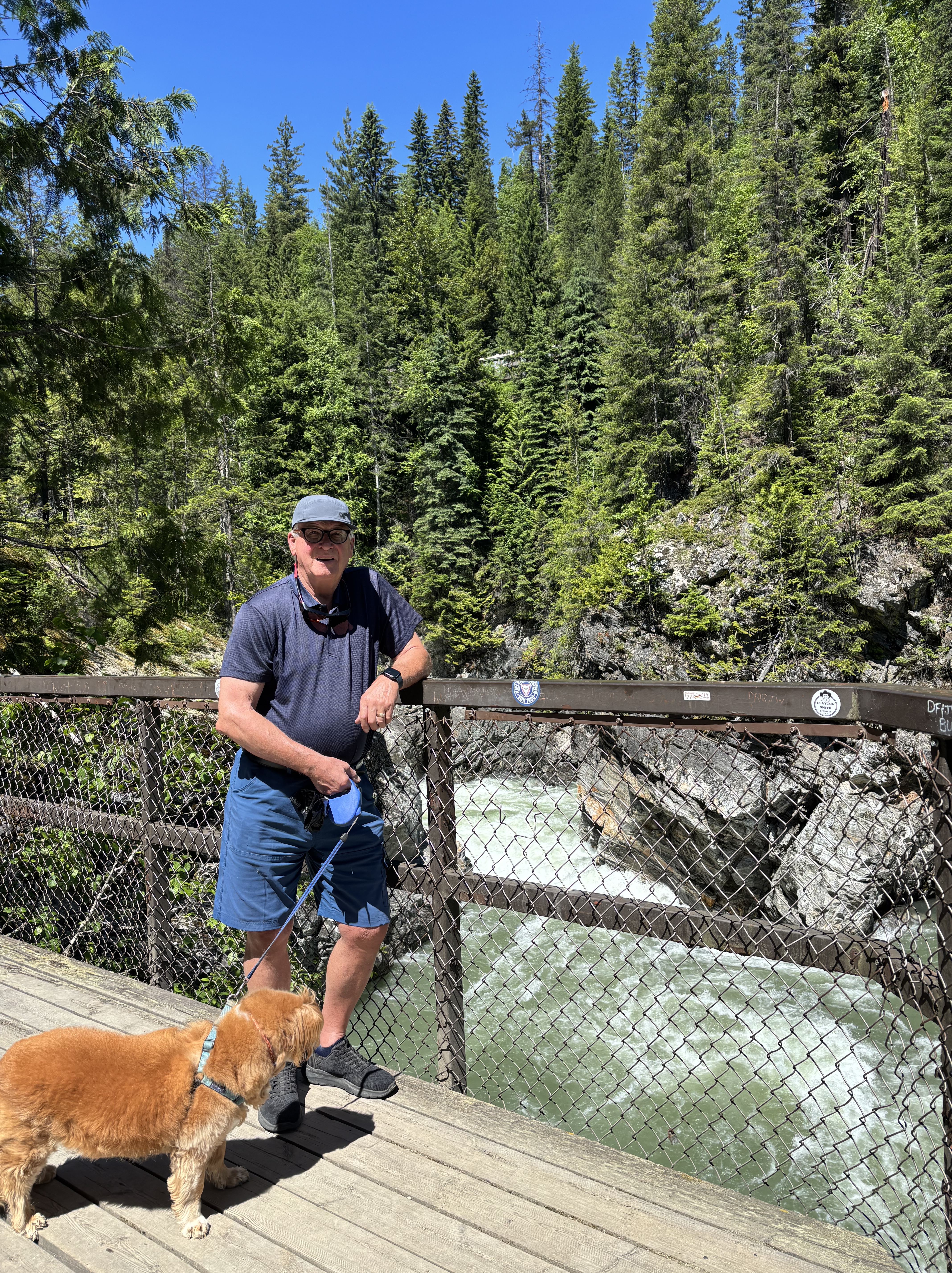
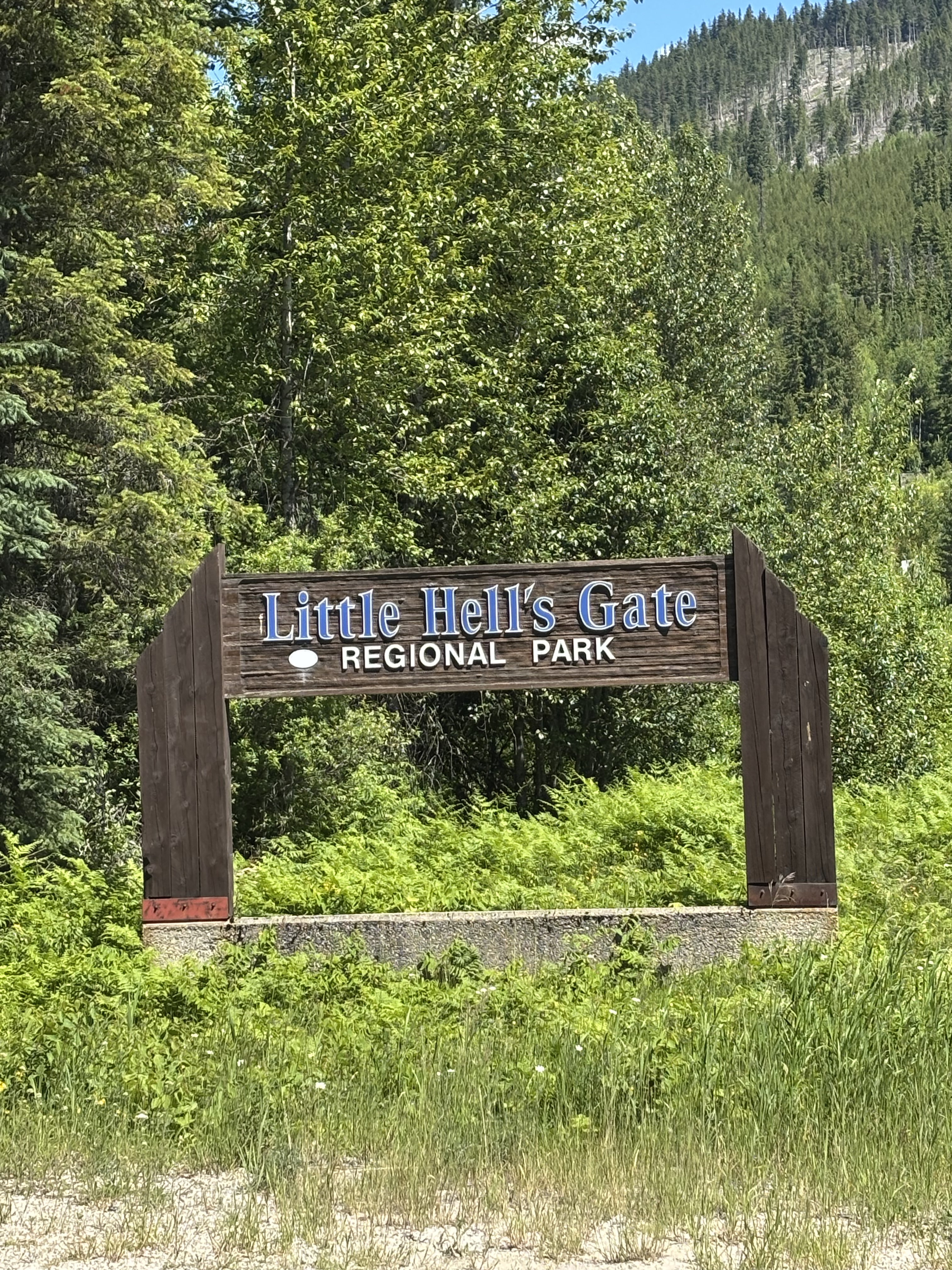
Day 3 and we continue up the Yellowhead Highway, #5, along the North Thompson River. Alexander Ross, an early western Canadian explorer in the employ of the Hudson’s Bay Company, is generally credited as the first European to travel the North Thompson River. Today we follow in those footsteps albeit via black hardtop, not rushing waters. Somewhere between Clearwater and Valemont we see a sign saying “Little Hells Gates” Well the point of this trip is to explore these out of the way points of interest so off we go down this narrow gravel single lane track through the trees. We see a sign that says “Little Hells Gate 3kms”. Man I hope we don’t meet anyone coming towards us. Sure enough, about half way in we meet an oncoming truck. The road is not wide enough for two vehicles to pass. I ain’t backing up. Fortunately it was a short back up for the truck and as I came along side I stop and roll down the window. ” Is there somewhere to turn around up here” I ask. “Yes” the driver replied “but don’t drive down the hill as you won’t get back up pulling your trailer.” Good thing I ran into this fellow. Great advice it turns out to be as I would not have gotten back up the hill. Anyway we stop, managed to get the truck and trailer turned around and heading the right way to get out. We hike down to the Little Hells Gate. Wild water surges through a narrow gap in the canyon. A CN train snakes it’s way along a ledge higher up the canyon wall. A scene representative of the ruggedness being tamed by the industry of mankind.

Well needless to say we made it back to the highway, continuing up the Yellowhead to the junction with Highway 16, the northern TransCanada. We turn east and soon see in front of us the striated visage of Mt Robson rising against the morning sun. It is the highest peak in the Canadian Rockies. Called YUH-HAI-HAS-KUN which means “Mountain of the Spirit Road” in the Secwepemc language, the first Europeans to officially climb it were Austrian Mountain guide Conrad Kain, Canadian William Foster and American Albert MacCarthy in 1913. An earlier attempt in 1909 by two Canadians, Rev. George Kinney and Donald Philips who claimed to have reached the summit but it is generally believed they were unsuccessful.

Little Hells Gate
Mt Terry Fox rest area
Little Hells Gate lurs us in

A little later on it’s time for a comfort break so we pull into the Mt Terry Fox Rest area. Obviously dedicated to the memory of Terry Fox it offers an inspiring view of the mountain named after the Canadian hero.

Soon we roll into Jasper National Park and our destination for tonight. We find a great spot at the Whistler’s Campground and settle in for the night. All in all an interesting day. More Details on Jasper tomorrow.

“Ec k etic-ucw” which means “sleep well” in the Secwepemc language

BETWEEN THE TRAINS AND THE TRUCKS

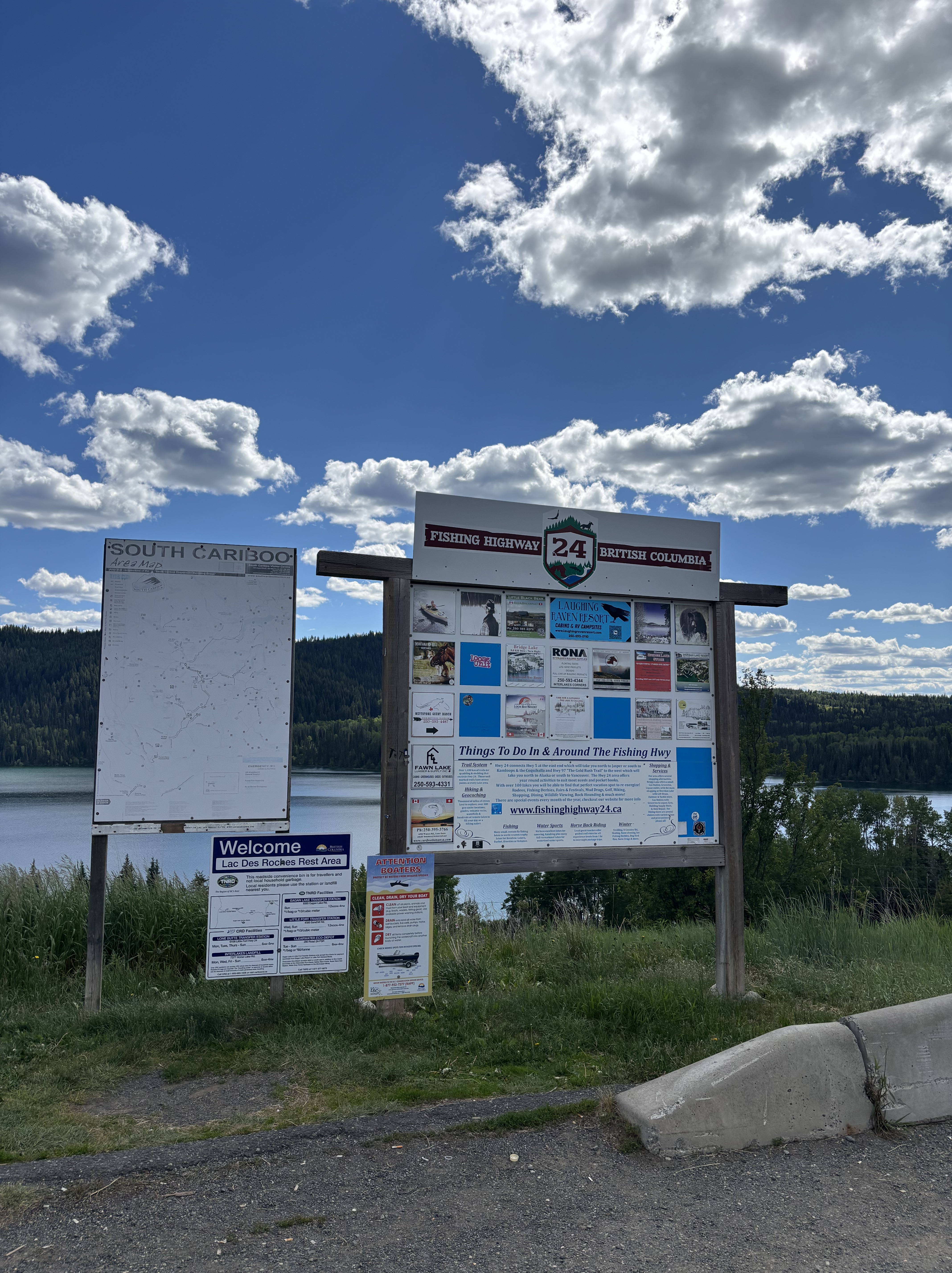
Day 2 had us up early and after a hearty brekkie we hooked Edna to trusty old Tex and we’re off. Continuing ever higher up Highway 99 we hit Lillooet before noon. Finding the cheapest place in town for diesel ( $2.05 per liter) we gas up and continue on. Lunchtime finds us stopping beside Pavilion Lake. We continue through Marble Canyon and soon find ourselves rolling downhill into the historic Hat Creek Ranch area and the Junction with Highway 97. Turning left we head up towards Prince George but at 93 Mile we turn east on Highway 24 through the Interlakes region . 100 kms and 100 lakes. A paradise for campers, fishers, canoeists and kayakers, the region boasts over 300 fishable lakes. (Wikipedia claim) Settled and developed in the early 1900’s by Angus McDonald and his 3 sons it is a high plateau of rolling pastures, forests, ranchlands, cowboys and loggers. At the end of Highway 24 there is a long winding downhill stretch of close to 10 kms, the bottom of which brings you to the tiny community of Little Fort and the Yellowhead Highway, Highway 5.
We turn left. Our destination for the night is Clearwater. Arriving just south of Clearwater is our campground. In we pull and set up. We are positioned between Highway 5 to the west and the North Thompson River to the east. On the east bank of the river runs the Canadian National Railway main line from Edmonton to Vancouver. All night long we were serenaded by the hum of semi tires on one side and train whistles and steel wheels on the other. At times it was comforting, the white noise from the drone of the sounds. At other times downright annoying as the trains just had to blow their whistles at certain points in their journeys.
Finally the night became still and I drifted into thr arms of Morpheus.

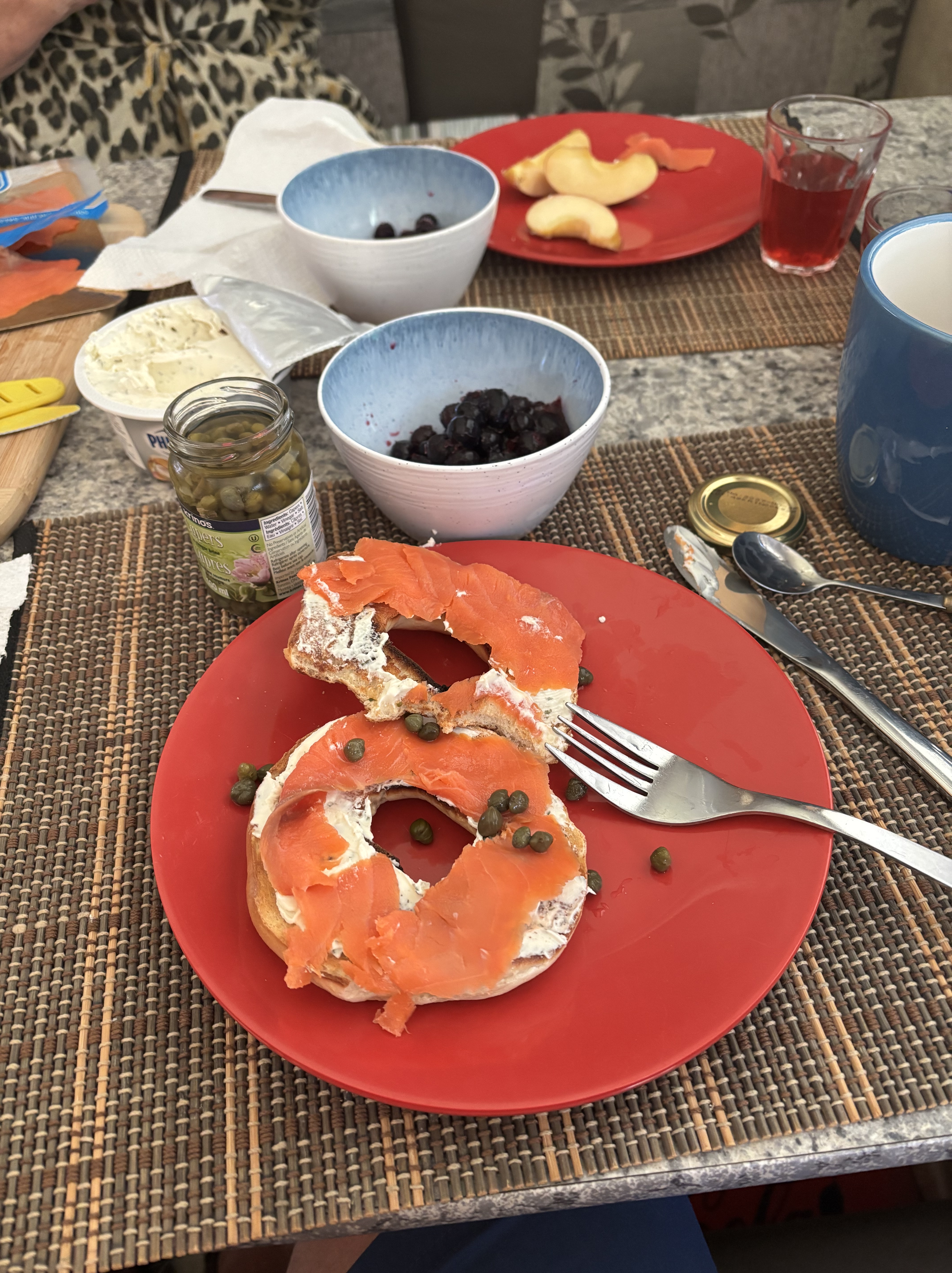
Bagels with a shmear,capers and lox

Welcome to the Interlakes

THE TRUE NORTH STRONG AND FREE TOUR

This morning at 7:00 AM we lock up the house, hooked up the trailer (Edna) to the new red Chevy Colorado ( Tex) and boarded the ferry for the mainland. Thus begins our six week adventure travelling the highways and byways of this great country as far east as Kingston and Ottawa. Along the way we plan to visit cousins we haven’t seen in almost 70 years; friends we have known for 50 years in such places as Saint Albert, AB; Victoria Beach, MB; Thessalon, ON and of course my birthplace Kingston.

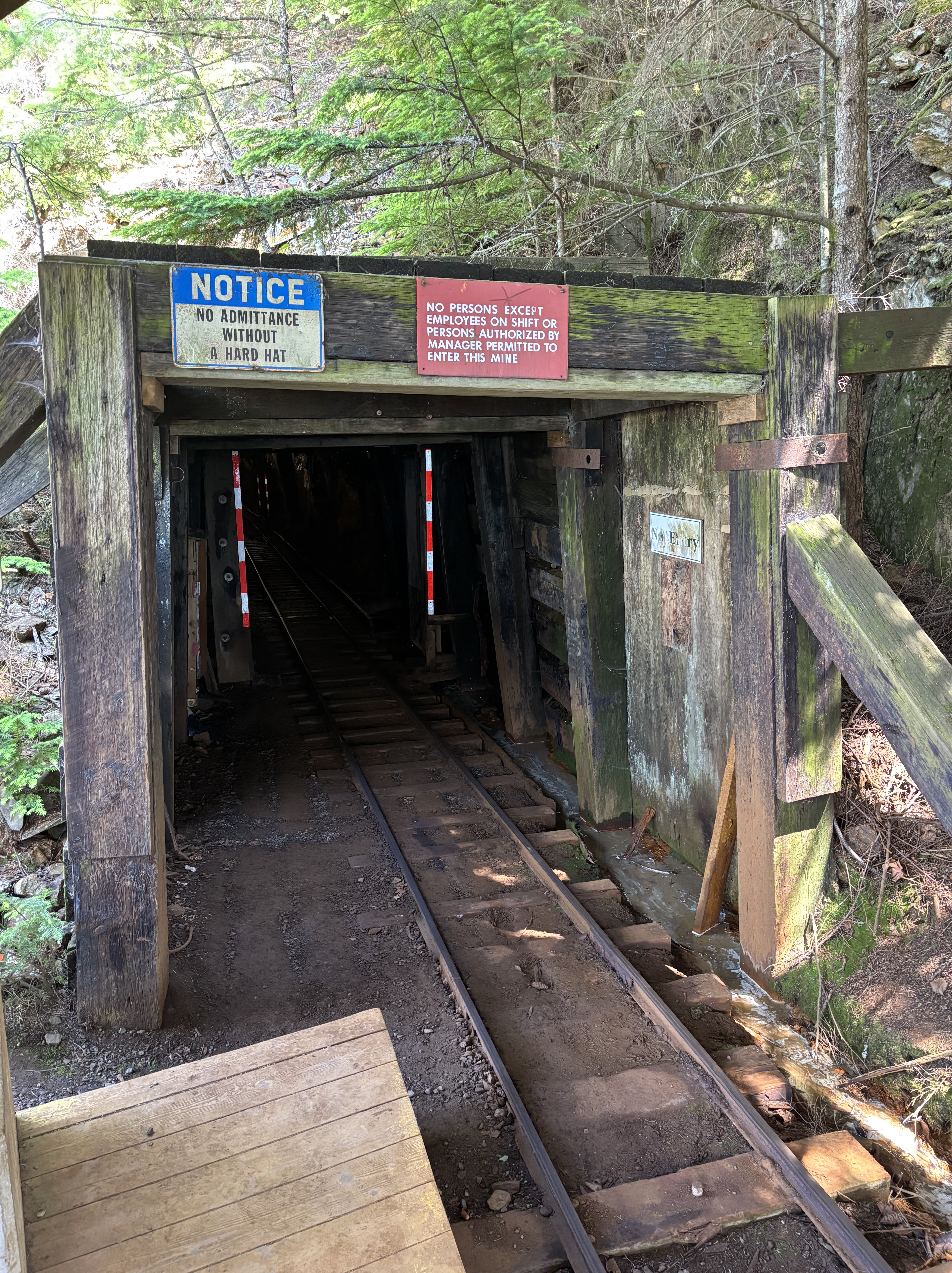
After lunching with Chelsea and family we spent the afternoon visiting the Britannia Mine Museum at Britannia Beach on highway 99 north of Horseshoe Bay. Having driven past this site many, many times over the years its history has intrigued me every time we passed.
In 1888, a local doctor, Dr. A Forbes, chanced meeting a Mr Granger, a local fisherman. Forbes was an amateur prospector, who like every other prospector, was looking for gold. Granger showed him a bucket of rocks containing traces of copper and for $400, would show Dr. Forbes the source of the ore. Up Mt Shear they trudged to the site. Unimpressed with what he found, and due to the lateness of the day they spent the night bivouaced on the mountain top. The next morning, while working his way down, he took to examining various samples of rock. At one point a large buck appeared. Forbes shouldered his rifle and downed the buck with a shot to the neck. While thrashing around, the buck scraped and kicked the moss off of some rocks. Upon closer examination the good doctor found some promising showing. He then set off a charge of dynamite which revealed a considerable trove of good copper ore This was the beginning of what was to become the largest copper mine in the British Empire.

The resulting find opened as Britannia Mine in 1904 and operated for 70 years. At one point it was the largest copper mine in the British Empire and accounted for 17% of the world’s copper output. A truly fascinating exhibit and one I would highly recommend to young and old.
After bidding farewell to the “fam” we hopped in “Tex” and headed up 99 , through Whistler and on to Nairn Falls Provincial Park, near Pemberton. We set up the trailer and settled in for a well deserved snooze, letting the sounds of the Green River lull us to sleep.

Lets see how many kms we do
Tex and Edna road ready
The 3rd mill built on the site after fires destroyed the first two
The opening to 240 kms of underground tunnels in the mine.
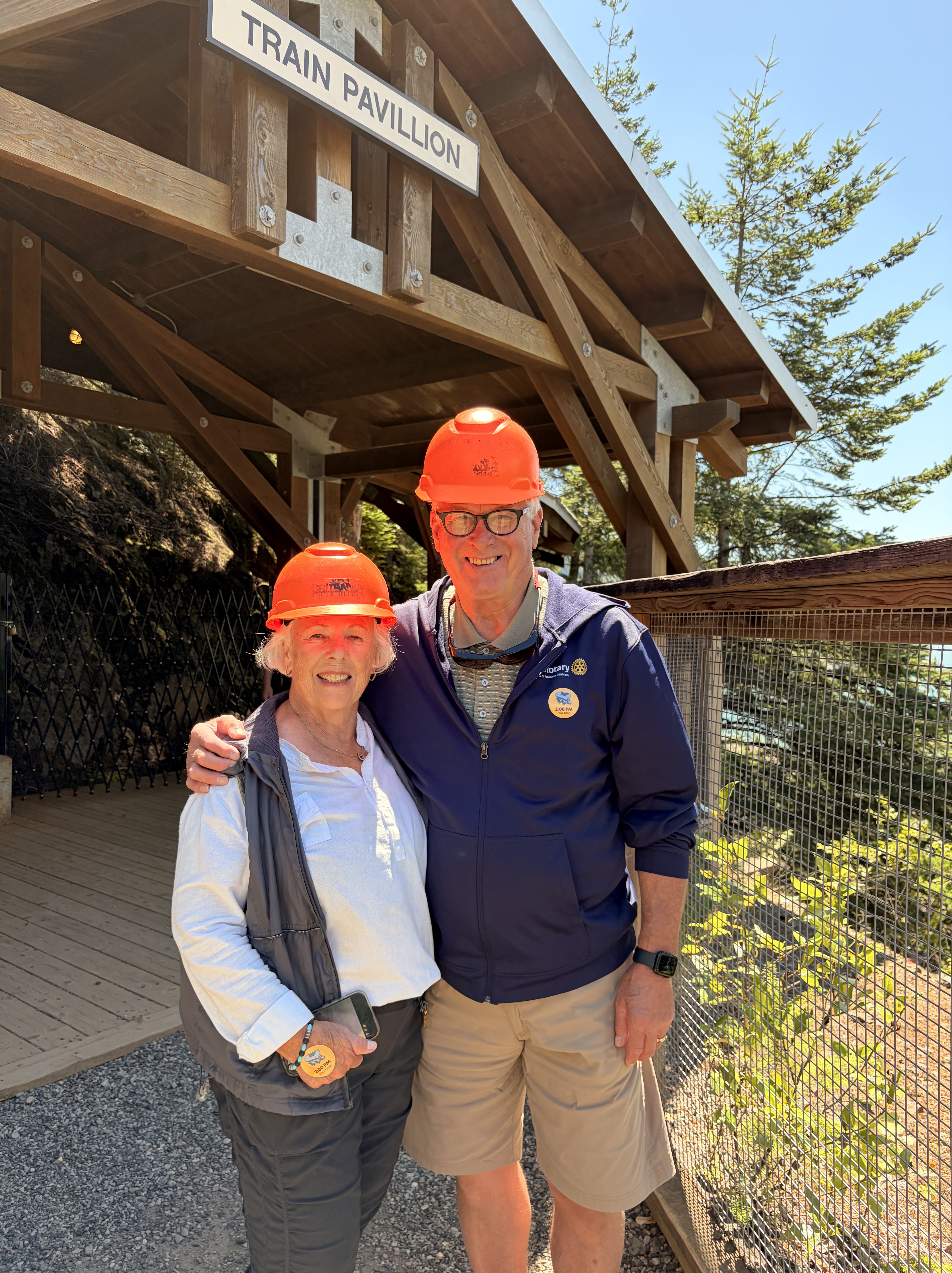
Ready to board the mine train for our underground tour.

DONE, DONE AND DONE

On Sunday we Uber to Cape Town International to board the FLYSAFAIR 737 for the 2 hour flight back to Joberg and an overnighter at the Airport Inn Bed and Breakfast. We have a long trip home ahead of us.  

Monday morning after a hearty breakfast provided by the Inn, we repack our carryons and head for Oliver Tambo International. It is early as our flight isn’t until 2:40.  By the time we arrive at our gate, it looks like a full flight and by the time we are roaring down the runway I realize that yes the plane IS full. Our first leg of 5.5 hours takes us to Addis Ababa in Ethiopia. We are on Ethiopian Airlines and Addis is their hub. It is the largest airline in Africa with over 150 planes. Row after row of the brightly coloured planes sit in the bright lights of the tarmac. As there are so many flights in and out of Addis, there aren’t enough gates for the inbound flights so the planes park on the aprons and passengers offload onto buses for the short trip to the terminal. Vicki and I get separated coming off the plane. She gets on a bus and heads for the terminal before I am off the plane. When my bus gets to the terminal, I am deposited at a different entrance than Vicki so she misses me when I enter. We have a narrow window to make our connection so I start to panic. As an incoming passenger we have to clear security coming in as well as out. No Vicki at the incoming security so I make my way to the outbound security. No Vicki. “ Well”, I say to myself. “ I hope she’s at our gate. “ 

Making my way to outbound security, No Vicki. The panic meter inches upward. “She must have gone through “ I think. As I’m waiting my turn to go through the scanner I see her enter the lineup and all is right with the world again. We clear and proceed to the gate where the loading has begun. 

We are on a Boeing 787 for this leg. Fortunately we are only 3 rows back from the door so fairly good seats. We have a really long flight. 16 hours to Chicago broken by a 1 hour technical stop in Rome for fuel. New meaning to the words “long haul.”

We arrive in Chicago at 8:30 AM right on time. We have a 7 hour layover which turns into 8 hours soon after our arrival. Good ol’ AirCanada. Arriving in Vancouver 4.5 hours later we are met by Chelsea and whisked to Tswassessen Ferry.  2 hour ferry ride, to be met by Jami and then home. Milo happy to see us. He hasn’t forgotten us. 🐶

By the time our heads hit the pillow it is about 50 hours since we have been up with nothing but short naps throughout that period. It takes us 4 days to regain our equilibrium. 

So back to normal routines. I have reflected a lot on our trip and have only a few regrets. One is that we did not visit Durban and secondly we did not drive the Garden Route. My last regret is not Parasailing.
October 2024

ICARUS SHOULD HAVE FLOWN ON A CLOUDY DAY

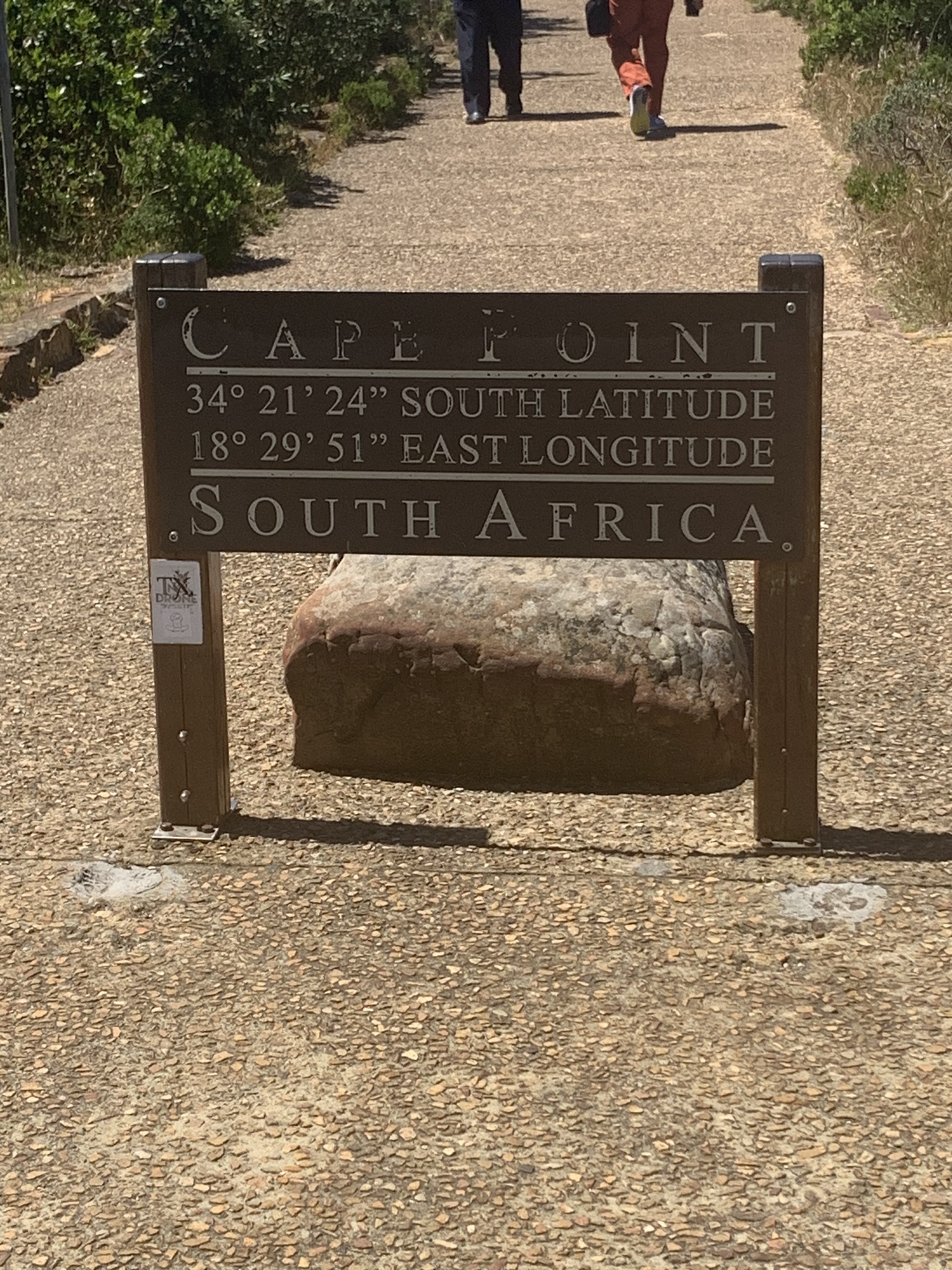
Our last two days in Cape Town. Yesterday we got on the Big Red Hoho and headed south down the “Peninsula” towards Cape of Good Hope and Cape Point, a journey of some 66 kms. We criss crossed back a forth across the Peninsula ( I guess to add some Distance and time to our day so we would feel like we got our money’s worth) until we reached the gates of the Cape Point portion of Table Mountain National Park. The countryside this far down the Peninsula is pretty bleak but beautiful in it’s own way. Rocky headlands, sparsely vegetated and stony hillsides with the occasional bright yellow pincushion protea bush to break the bleakness. Very windy. A popular destination for the day with lots of buses and tour vans in the parking lot. Many people hiking up the steep, paved pathway to the Cape Point Lighthouse for pics of themselves and the Cape Point sign. This is the furthest tip of the Peninsula. A few hundred yards to the right is the actual Cape of Good Hope as the Peninsula actually turns back north so the tip is slightly north of the Cape. Back on the bus for a round about 10 minute trip and we are at the parking lot for the Cape. Get in the lineup to get our pictures taken at the Cape sign. The party in front of you in the lineup gives you their phone and you snap their pic and give their phone back. Next is your turn to pass your phone back and clamour over the rocks to pose behind the sign. Retrieving your phone you move out of the way and the line continues. Everyone patiently awaits their turn. Very polite and democratic.

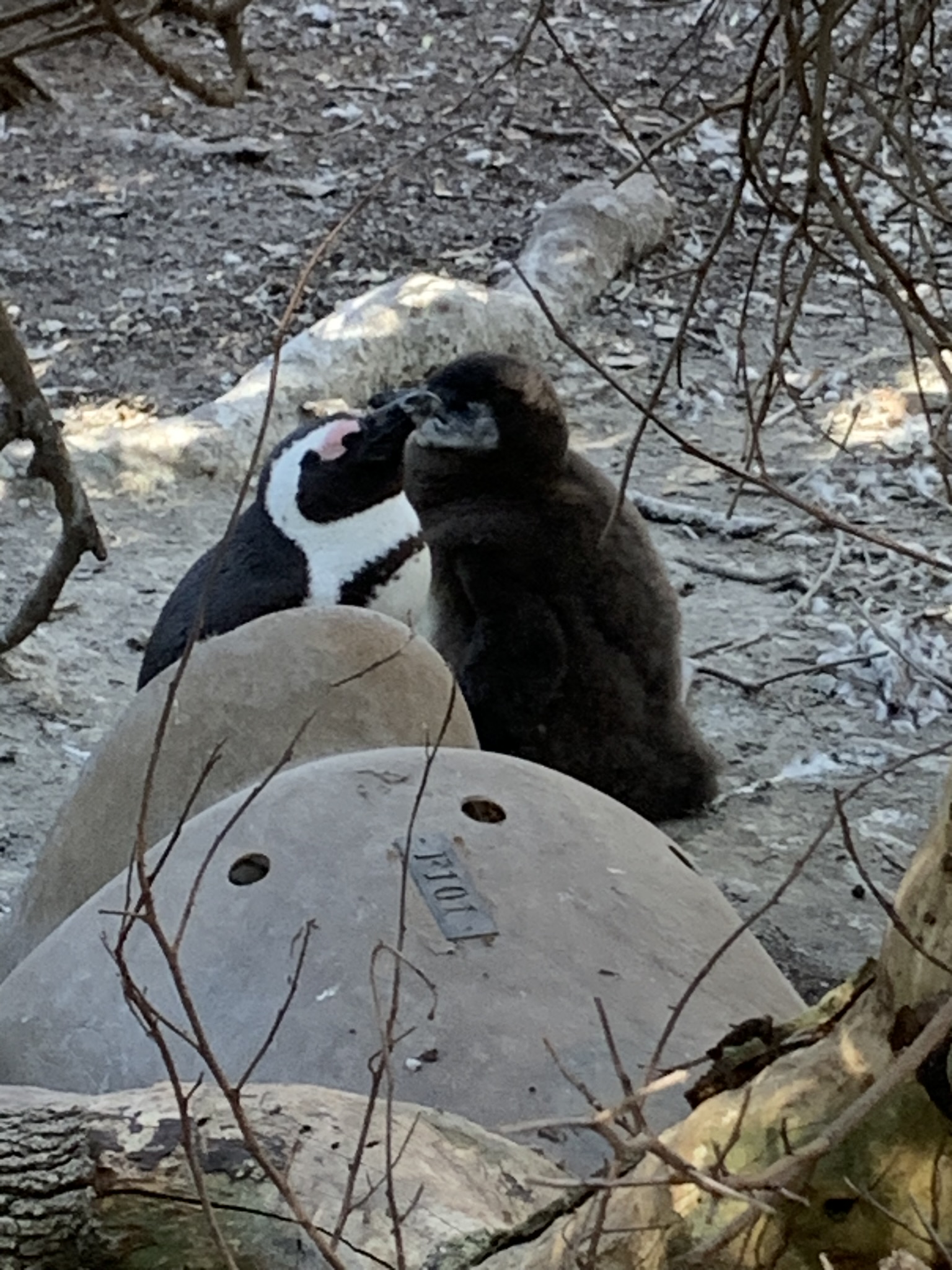
After a picnic lunch on the bus out of the wind we are on our way again. Next stop is Simon’s Town, home of the African Penguin colony. There is an extra charge to actually go into the compound and see the penguins up close. We were able to walk around the perimeter of the compound and get an up close look at the little critters. Apparently they are the smallest of the 18 penguin species standing about 18-20 inches high and are very speedy swimmers.
Approaching 4:30 we pile back on the bus for the journey home. By the time we alight from the bus it is 5:45. We have been on the bus since 9:30 this morning. We certainly feel as if we got our money’s worth.
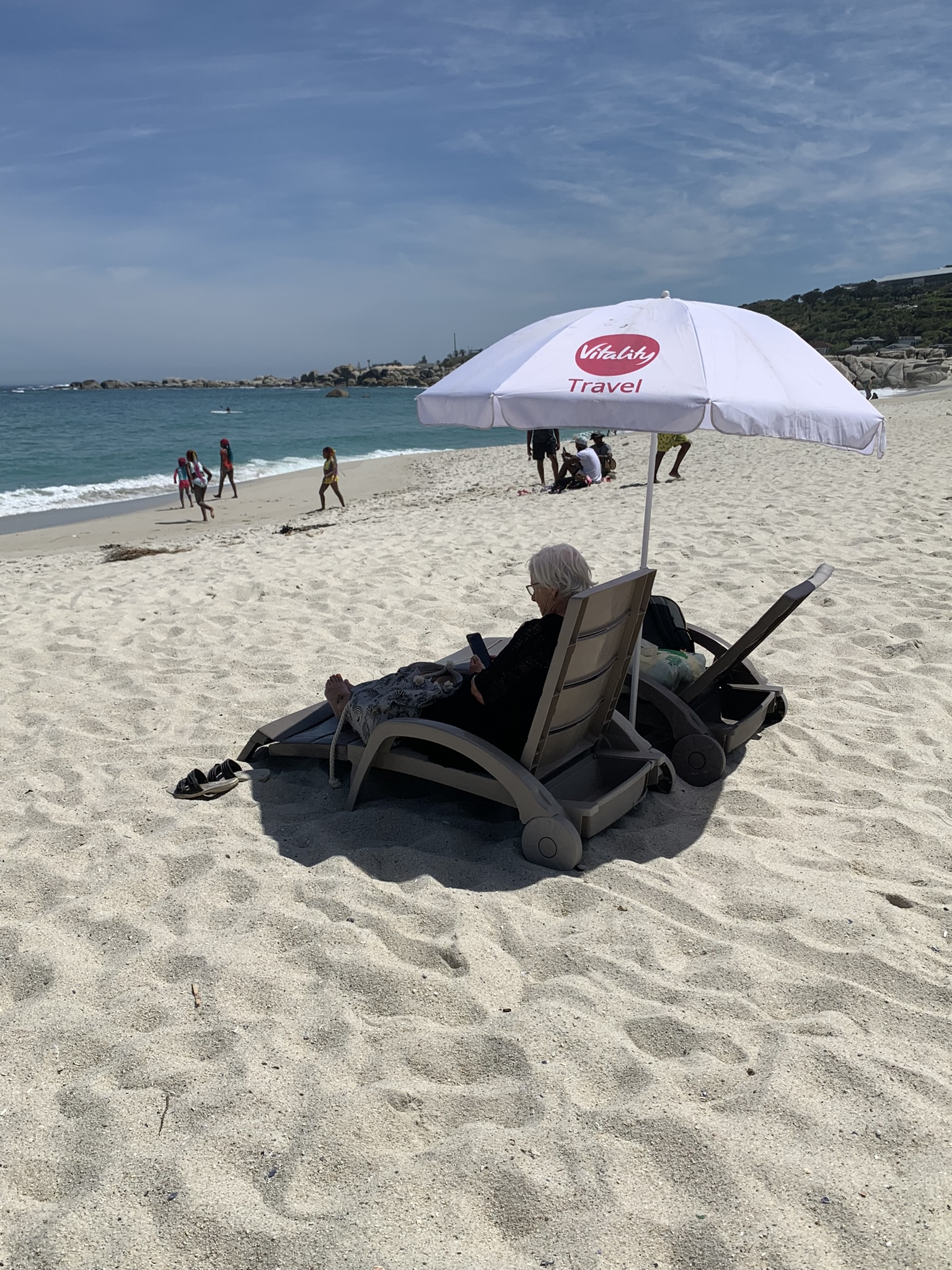
Saturday is supposed to be warm and sunny with a high of 28. We had decided that today was going to be a beach day so we Ubered to Camps Bay for a day on the beach. We rented two loungers and an umbrella, lathered up with the SFP 50 lotion and set back to watch the volleyball and surfers. Unfortunately the wind soon picked up and the clouds rolled in. The volleyballers kept at it most of the day but we only saw two surfers. The water looks very inviting but brrrrrr it is cold. I’m sure it is colder than the West Coast. They claim the water on the Atlantic side of the Peninsula in Camps Bay is about 12-14 degrees Celsius. On the other side of the Peninsula on the False Bay side it is upwards of 25 degrees. Huge difference. We did manage to hangout until about 3:30 then dialing up my faithful Uber app we had a car within 2 minutes. As we jumped into the back seat the stereo was blasting. Johnny Cash “Ghost Riders in the Sky” then “A Boy Named Sue” were playing and we jumped right in. Good fun. I must say that Uber is a must when traveling in SA. Very inexpensive and very safe.
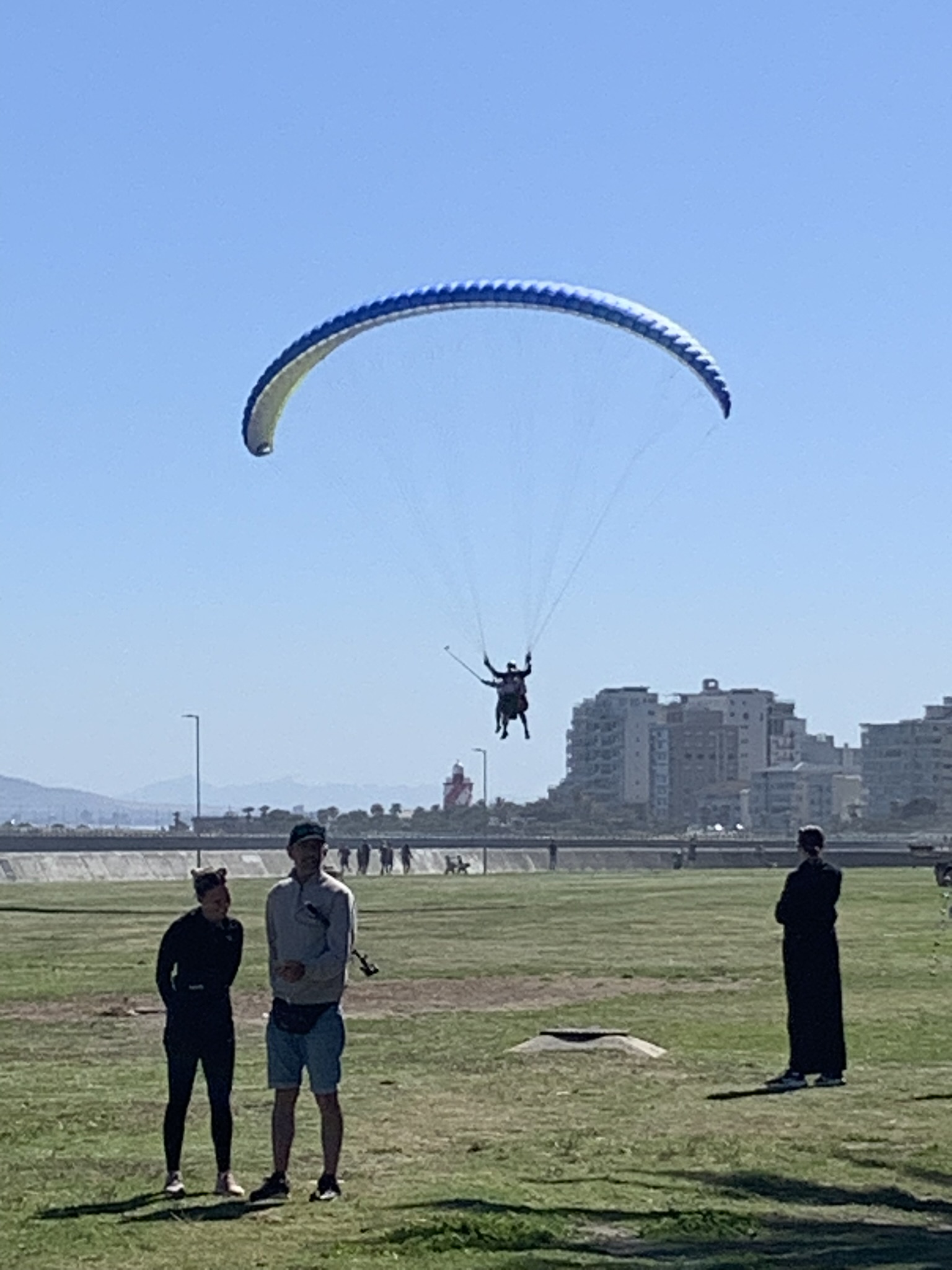
Earlier in the week, along the green space at the waterfront Promenade in Sea Point we enjoyed watching the tandem paragliders come in for a landing. They launch from atop Signal Hill, 350 meters up. I have been thinking about it all week so I decided as this was our last day here I was going to do it. As I thought about it today, Icarus came to mind. If you don’t know the Greek legend of Icarus, his father built him a set of wings out of bird’s feathers and bees wax, in order to escape the Labyrinth of Crete. His father warned him not to fly too close to the sun as the warmth of the sun would melt the bee’s wax and he would fall from the sky. Ignoring his father, he did just that and fell into the ocean and drowned. The conditions today were perfect for a safe flight. Cloudy skies and a slight breeze. I was introduced to my pilot Harry, told I had a “nice weight” and off we went to the top of Signal Hill. Unfortunately on the way up the guide received a phone call from the hill saying the wind had picked up, was now blowing higher than the max so we turned around and returned to the beach. No flying for me today. I did get my adrenalin rush though, just thinking about it.

So that is our Cape Town stay. Back to Joberg tomorrow and heading for home on Monday. We have 36 hours of travel time ahead of us. I’ll keep you posted. Love to all

DIFFERENT ENOUGH TO BE EXOTIC, FAMILIAR ENOUGH TO BE COMFORTABLE

How do you measure the value of a haircut? By the amount of hair taken off of course. If that is the case I got great value in Cape Town. Every time we walked by the little four chair barbershop next to our apartment, it was always busy so I thought they must be good at what they do. So I popped in for a trim Vicki says it looks great. I know my hat isn’t as tight anymore. I have sent a message to my barber at home to reschedule my next appointment. Normally I go about 5 weeks between trims. After today I won’t need to visit her until next June. 😂

Today was a bit of a laid back day. Nice late breakfast, almost brunch, at the Winchester Hotel down overlooking the promenade. Then a bus ride down to the waterfront to get our tickets for tomorrow’s excursion then a little shopping therapy at the V & A Waterfront. The V & A waterfront is also called the Foreshore. In 1938, work was started to reclaim this part of the city from the sea. The results added 230 hectares of usable land to the city’s Central Business District. Today the V & A Waterfront is the most popular tourist attraction in South Africa, ahead of Kruger National Park and the pride of Cape Town, Table Mountain. 24,000,000 tourists visit annually. I’m sure many of them were here today. Lots going on. Tour boats in and out of the basin. Musical buskers everywhere. Packed restaurants and shoppers. A shopper’s paradise. We resisted the allure. There is something to be said for the practically of carry on luggage when traveling. No room!

One of the great things about a Rotary Friendship Exchange is the opportunity to get immersed into the local community. As mentioned earlier South African is different enough to be slightly exotic but familiar enough to be comfortable. English is very widely spoken so it is easy to communicate with the locals. We are the ones with an accent. One Starbucks barista said “Look at me” when he couldn’t understand my order. This allowed him to read my lips. The language similarity also allowed me to tell the barber what I wanted in terms of my hair cut. A little bit was lost along the way as it is short but again Vicki says it looks great.
The day ends with a walk where we started this morning, on the Sea Point Promenade to watch the sun sink into the”western” Atlantic. Seems weird looking west at the Atlantic. Tomorrow we are off to Visit the Cape and a colony of Cape penguins. TTFN🙏🥰

ANOTHER CITY…..ANOTHER HOHO

Growing up I was taught and always believed that the Cape of Good Hope is the southernmost tip of Africa. I have been disabused all my life. It took until I reached my 73rd year and actually traveled here that I learn the truth. Cape Agulhas, located about 220 kms east southeast is actually the point where the waters of the Two Oceans , the Atlantic and the Indian, meet. Early Mariners sought refuge in the seemingly protected waters of Table Bay. That is until the winter months of the Southern Hemisphere, July, August and September when the south easterly gales blow. If the commentary on the tour bus is to be believed, there are about 2700 ship wrecks in these waters although another source suggested the number is actually 650 over the last 400 years.
Speaking of tour buses, Vicki and I have enjoyed the hospitality of the big red double decker buses known in over 100 cities around the world as the Hop On Hop Off City Tours, affectionately known as the HOHO. We have ridden these buses in Mexico City, Guadalajara, Sidney Australia, New York City to name a few. A great way to see a new place and meet interesting people. Cape Town is no exception.

After a flight from Joberg Monday morning we landed and Ubered to our home the next 6 nights, a great Airbnb apartment in Sea Point, one of southern suburbs of Cape Town. We are two blocks from the Sea Point Promenade which stretches from the Victoria and Alfred waterfront to Sea Point. We boarded the bus red bus and spent the day traveling throughout the city, from said V&A waterfront to the Central Business District, over the other side of Signal Hill and Lion’s Head. There are actually 3 routes for the HOHO here in Cape Town, one of which takes you up through wine country with stops at 3 different wineries. We alighted at Groot Constanta, the oldest winery in South Africa. With vines planted in 1685 it has been producing and exporting wines for kings and emperors and everyday folk ever since. We enjoyed a great lunch on the grounds of the old manor house which is now a museum with the nearby slave quarters serving as the restaurant and art gallery. After a glass of Pinotage enjoyed by Vicki we resumed the bus trip. Next we ventured into Hout Bay and Camps Bay further south along the coast. The former is a mixed residential area with tin shacks for the less fortunate population stretching up the hillsides, a large marina and dock ares at the water front and it’s very own Lichtenstein Castle perched high upon Rhodes Mtn overlooking the bay. Heading back closer to town, we pass through Camps Bay, a very upscale neighborhood of expensive apartments and homes nestled along the seashore. Beautiful setting. Sandy beaches and sparkling blue water on one side of the bus and trendy shops and restaurants on the other side. We stopped and got a cappuccino for Vicki and a chai tea for me and walked the beach, enjoying the suntanners and beach vollyballers.
Back on the bus we continued our journey and soon we’re back at the V & A waterfront. As it was now approaching 5:30 we boarded another bus for the sunset tour. This is a different route that takes you up to the top to Signal Hill, a landmass in the shadow of Table Mountain. Here along with 100’s of other tourists we watched as the sun sank in the western Atlantic. As the iconic south easterly wind was blowing we huddled in the enclosed part of the bus to stay warm. Now in full darkness we headed back to the V & A waterfront and then an Uber home.
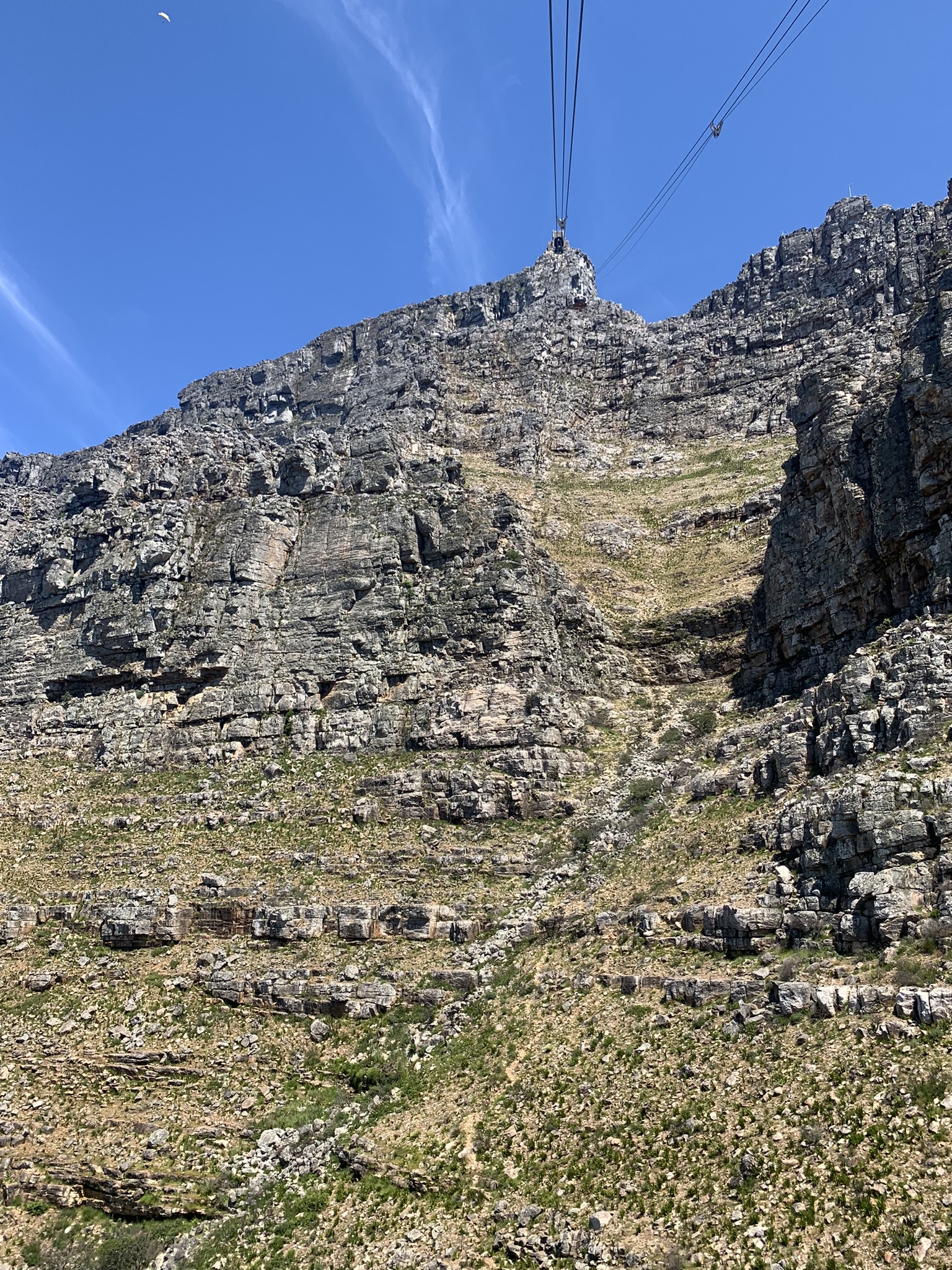
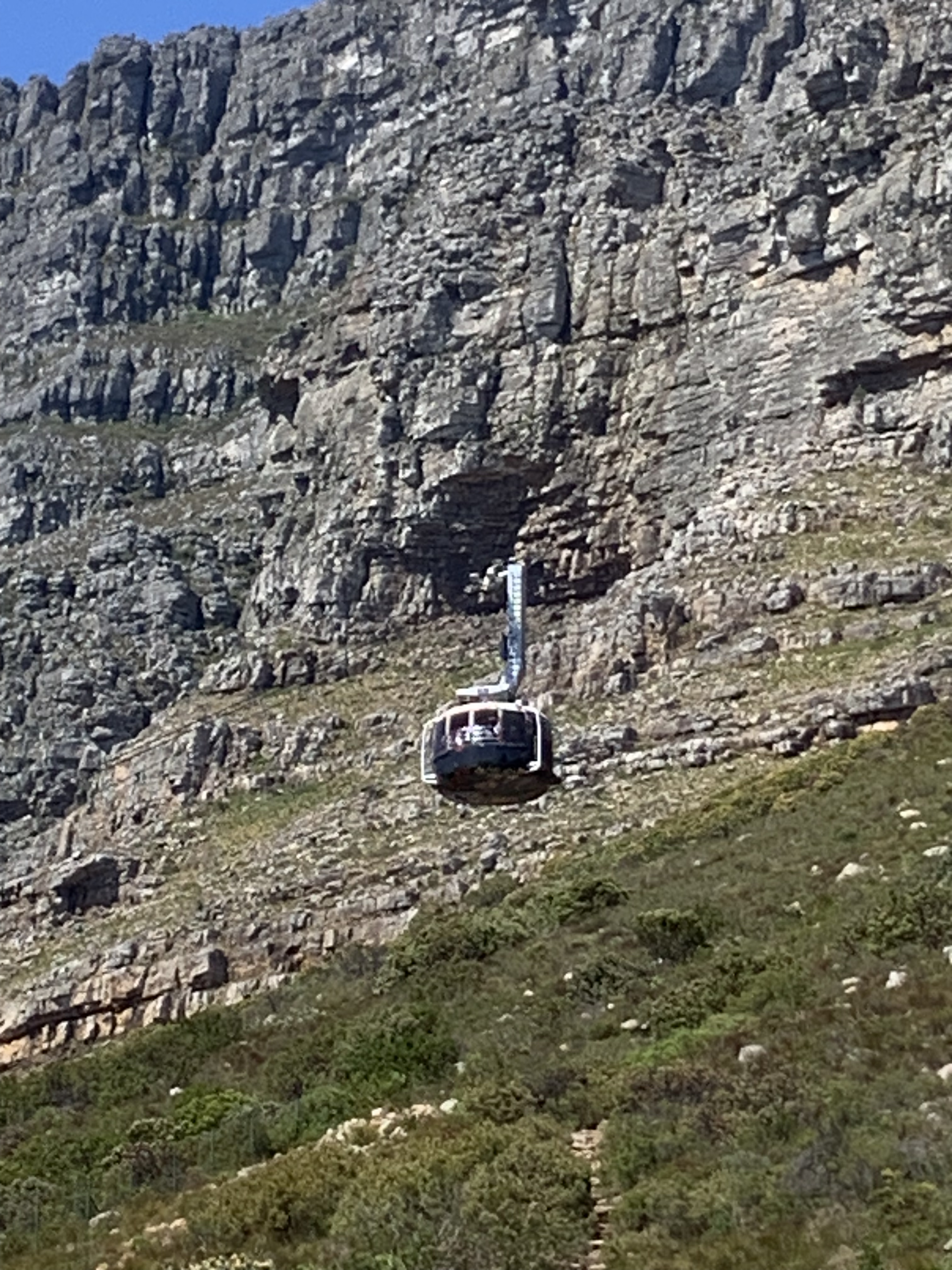
Today we got on the bus again for the tour up Table Mountain. This iconic geological feature dominates the Cape Town skyline. At 1067 meters or almost 3500 feet, the summit is reached by a two car aerial tramway. This is third most popular tourist attraction in all of Africa and attracts about 1,000,000 visitors per year. I’m sure 100,000 of them were there today. It took us almost 2 hours just to reach the loading platforms. The trip up takes about 4 minutes and the car hold 62 people. While the car is in motion the floor turns so everyone gets a chance to see the view. And stunning it is. The city spreads out before us. We an see the beaches and turquoise waters of Camps Bay and Clippton Beach to the south Al the way through the industrial suburbs north to the Keoberg Nuclear power station. A few posts ago I mentioned that most of SA’s power is coal fired. This nuclear facility is the only one in all of Africa and produces 6.5% of SA’s power since the mid 80’s. There is a very informative walking trail where one can venture out across the top of the mountain. Be sure to stay on the path as it’s a long bumpy way down.
About 11 kms out in Table Bay is Robbens Island. In use since the Dutch East Indies traders set up camp here in the late 1400’s. Initially used as a farm to protect their sheep from local predators, it has seen time as a provisioning depot for passing trading ships and a post office. Since the late 17th century it has been used primarily as a penal colony. It’s modern history is notorious as it was the home for freedom fighters thought to be revolutionary by the apartheid regime. In fact, Nelson Mandela was incarcerated here for 18 of his 27 years in jail until 1982. Finally released in 1990, he went on the lead in African National Congreve is negotiations with the apartheid government and became it’s first democratically elected president in 1994.

So after a brief history lesson I will now take you back down the mountain. Off to the west we can see brightly coloured canopies of the tandem paragliders that use Signal Hill as their takeoff point. Yesterday as we waited to board our tour bus we watched as these masters of the sky came drifting in to land at the beach front. Very tempting I must say. More on that in a few days perhaps. We finish off the day with a cool tour around the Harbour, watching the seals lounging on the rocks.
The Victoria and Alfred Waterfront is so named because Queen Victoria’s second son Alfred tipped the first load of stone to start construction of the breakwater that protects the Harbour. This was needed as up until that point the winter storms battered the bay. 1858 was a particularly brutal season with over 30 ships wrecked. In 1860 the first stone of the breakwater were placed Hence the name Victoria and Alfred, not Victoria and Albert as is so often the name given in honour of Queen Victoria and her husband Price Albert.
Now you know a little bit more about Cape Town. There is mor to come. We are here for three more days there back to Joberg on Sunday and leave for home on Monday. Stay tuned

THIS CONVEYANCE ACTUALLY WORKS IN THE CITY OF GOLD

No matter what you call it; Joberg, Jozi, eGoli, JNB or Johannesburg, it is known as the city of gold. Founded in 1886 as a dusty mining town when an outcropping of gold bearing rock was discovered on the “Witwatersrand” or white water ridge, The discovery was erroneously attributed to George Harrison, an Australian prosecutor, in an effort to reinforce Anglo/British claim to the area. According to now accepted history , gold on the Witwatersrand was discovered 2 years earlier by Jan Gerritse Bantjes. The government of the day fearing a massive influx of fortune seekers ordered him to keep quiet about it. 2 years later, said George Harrison made his discovery , the word got out and the rush was on. By the mid 1890’s the population had reached 100,000 and today the greater Johannesburg stretches from the Soweto township in the south to Pretoria in the north, a distance of 82 kilometers.
At one point in the early 20th century, SouthAfrica was responsible for 25% of the annual gold production in the entire world. The world’s deepest gold mine is about 50 kms from Joberg. At a maximum depth of 4, yes that’s FOUR kms, it takes one hour for the lift to reach bottom where the temperature at the seam face is a staggering 60 DEGREES CELSIUS. Talk about a sweat box.

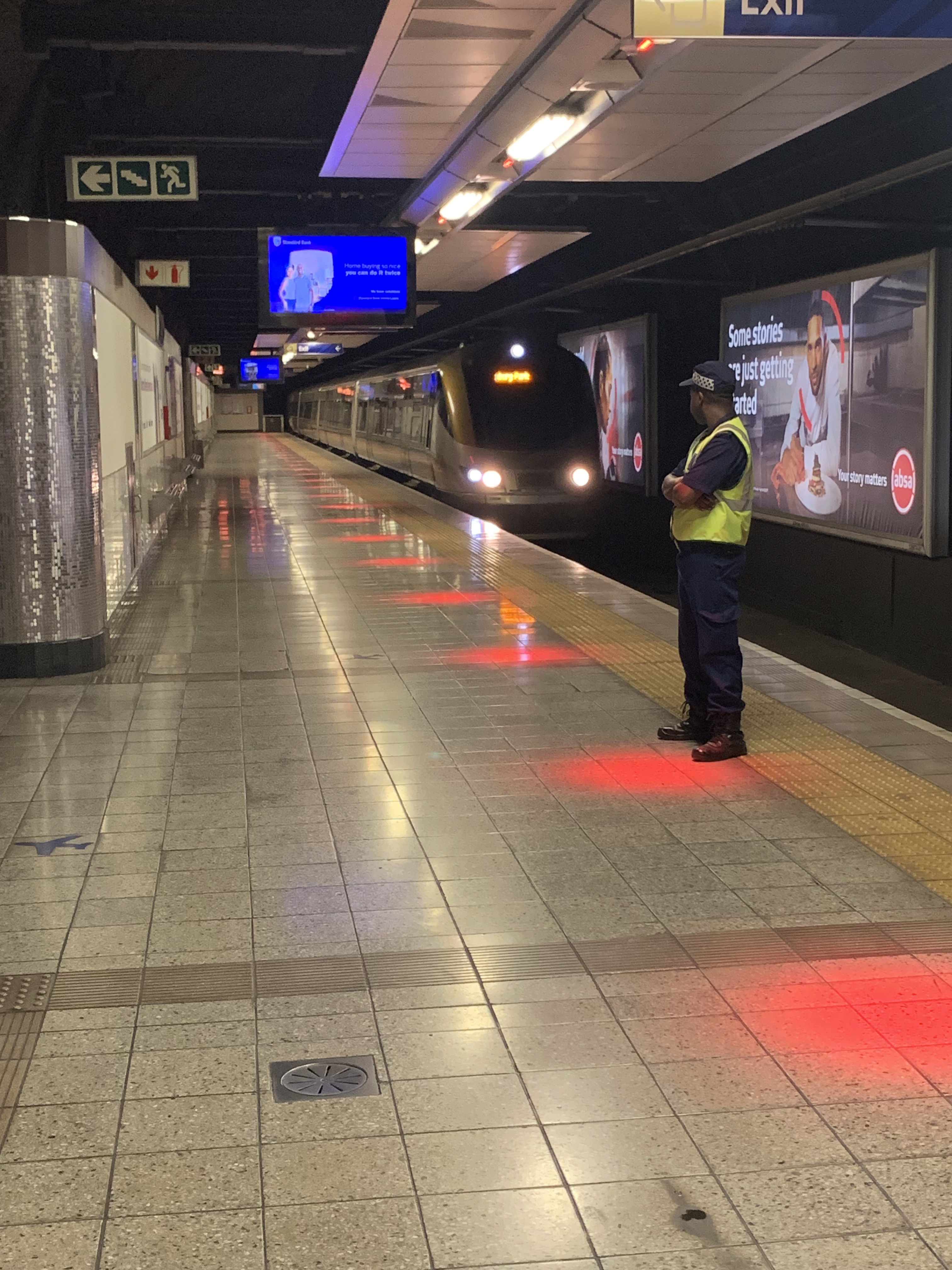
Starting in the old Central Business District or CBD is the main north south line of the Gautrain rapid transit system. Pronounced “howtren” it is named after the province of Guateng of which Joberg is the Capital. It runs north past Pretoria to the community of Hatfield. It is truly a marvel of modern engineering. Manufactured by Bombardier, a Canadian company, it moves people about efficiently and safely.. it really works. With security guards on the platforms and in most cars we felt completely safe. At the station nearest our hotel we were either drop off by our hotel shuttle or used Uber which is very inexpensive here.

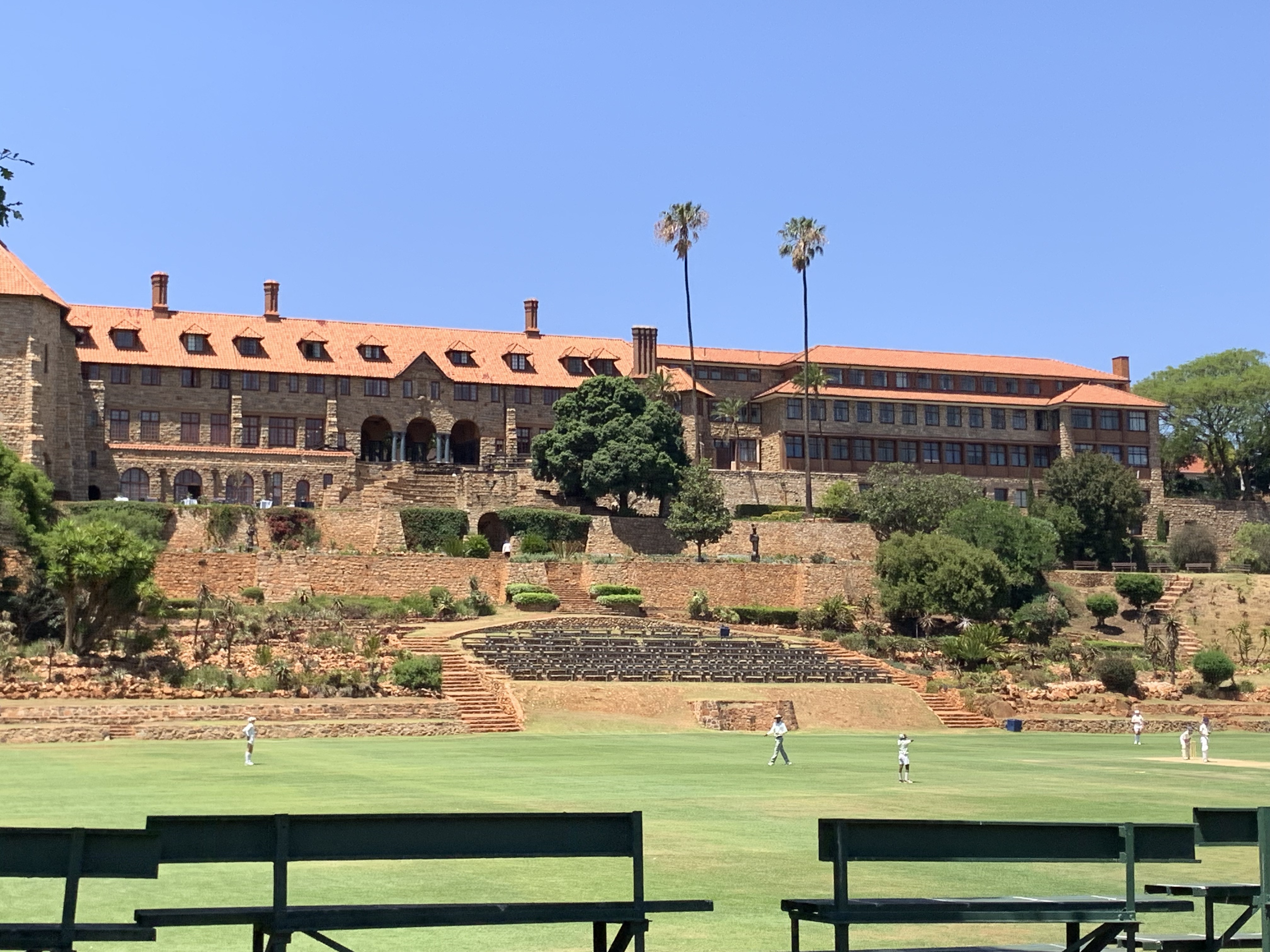
On Saturday we took the Gautrain to the Rosebank area and boarded the Hop on Hop off bus for a city tour. Rosebank is a modern new city area of expensive shops and business towers. One of our hosts works in this area for Standard Bank of South Africa. The bus tour took us past Wanderers Stadium, home of many SA cricket wins. Through the walled and gated community of Melrose Arch, past Nelson Mandela’s last house, now housing the Nelson Mandela Children’s Foundation. Next is the Houghten district, once home to the rich “Randlords”, beautiful old homes and imposing buildings of the private schools like St John’s School for boys and the Rodean School for Girls. Even though it was a Saturday morning, the school playing fields were alive with the sights and sounds of cricket and rugby games.

As the Captains of Industry and Commerce built their homes near their places of work, we were soon into the CBD. By 1896, a mere 10 years after of news of the discovery got out, there were over 100,000 people in Joberg. The CBD is or was home to the many mining, banking and industrial concerns that flourished in Johannesburg throughout the 20th century. The streets are narrow and the buildings tower over, sometimes blocking out the sky. In September 2000 the Joberg Stock Exchange relocated to the Sandton area. This was the death knell for the CBD as the prominent business center of South Africa. The once bustling streets and buildings are now largely deserted with broken glass in the windows. Once the businesses moved out the squatters moved in and gangsters began charging the squatters rent. To overcome this and preserve some value in their buildings, the owners came in and bricked up the lower floor entrances. The commentary on the tour bus suggests that a revival is underway but I saw little evidence of same.
The original mines on the Witwatersrand are nearby. There are many displays and exhibits of mining equipment and processes. You can still see the piles of mine tailings in the inner city. With the dramatic increase in the value of gold over the last 20 years and the developments in processing techniques, the old tailings are being reworked to extract minute quantities of gold. It is a dangerous occupation due to the presence of cyanide it the original processing of the ore.

An interesting development recently has the the influx of Chinese business interests. The Chinese are investing considerable amounts of money in resource extraction and infrastructure development. Highways, ports and a new airport at Stellenbosch. If the road you are on is smooth and free from potholes chances are it was built by and is maintained by the Chinese. The highways are choked with fleets of trucks carrying tons of minerals, especially coal. Almost all of SA’s power is from coal fired plants spread out over the country side, especially to the south west of Joberg. There is even a plant within the city limits.
Along with the Chinese comes a massive influx of Chinese consumer goods. To get these to the public there are giant malls and marts concentrated in one area of the city. On Sunday we visited one such place. If you are in need of retail therapy theses are the places to get your fix. The China Mall we visited has over 500 shops and stores. Everything from electronics, furniture, luggage, clothing, shoes, household goods to cell phone accessories, perfumes, and the like. The Chinese invasion has also extended to automobiles. Apparently there are over 20 makes of Chinese imports. Names such as Chery, Haval and GWM ( Great Wall Motors) are very common sights. One of our Rotary hosts drives a seven year old GWM SUV diesel. Over 300,000 kms, great shape and runs very well.

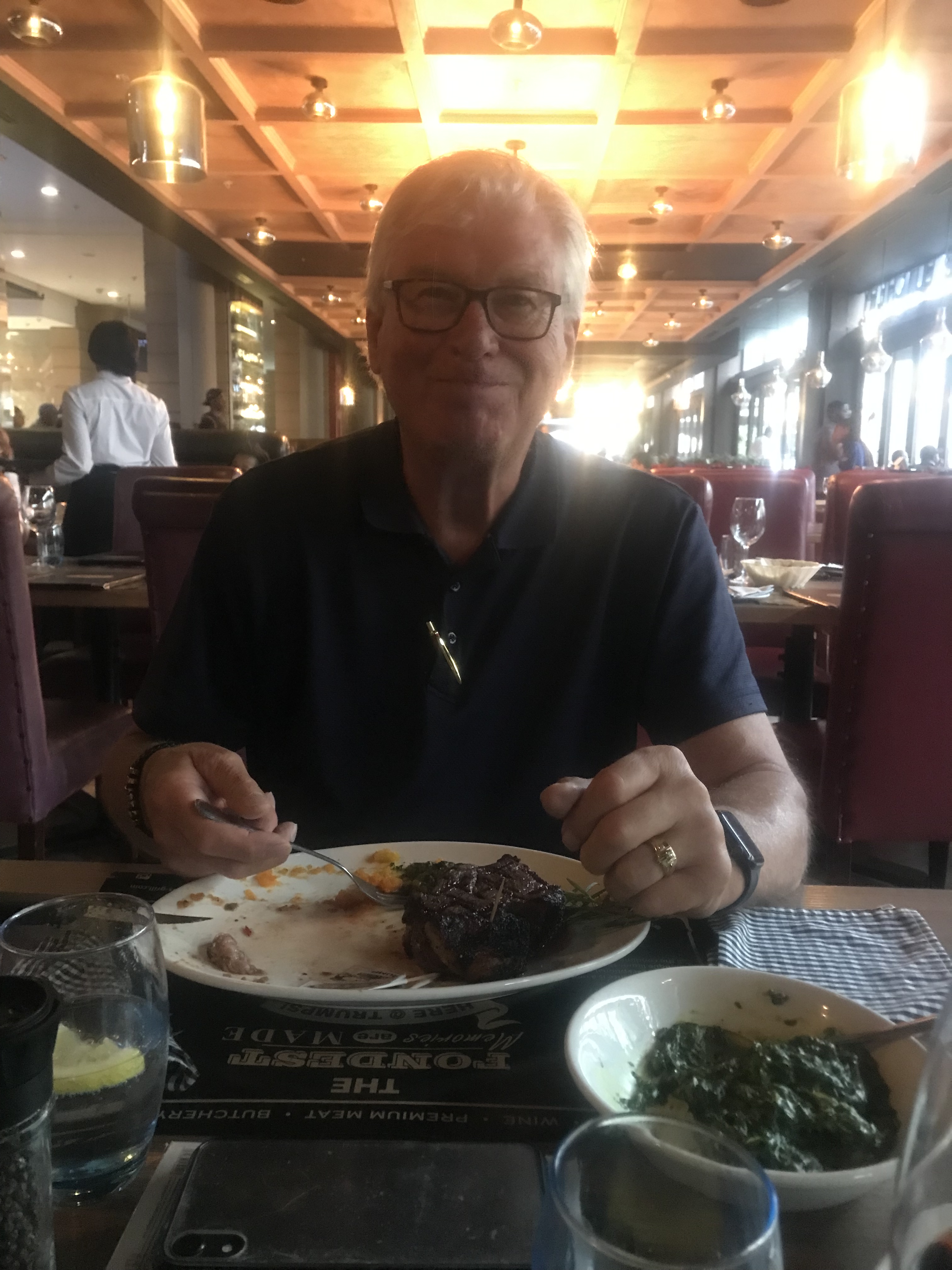
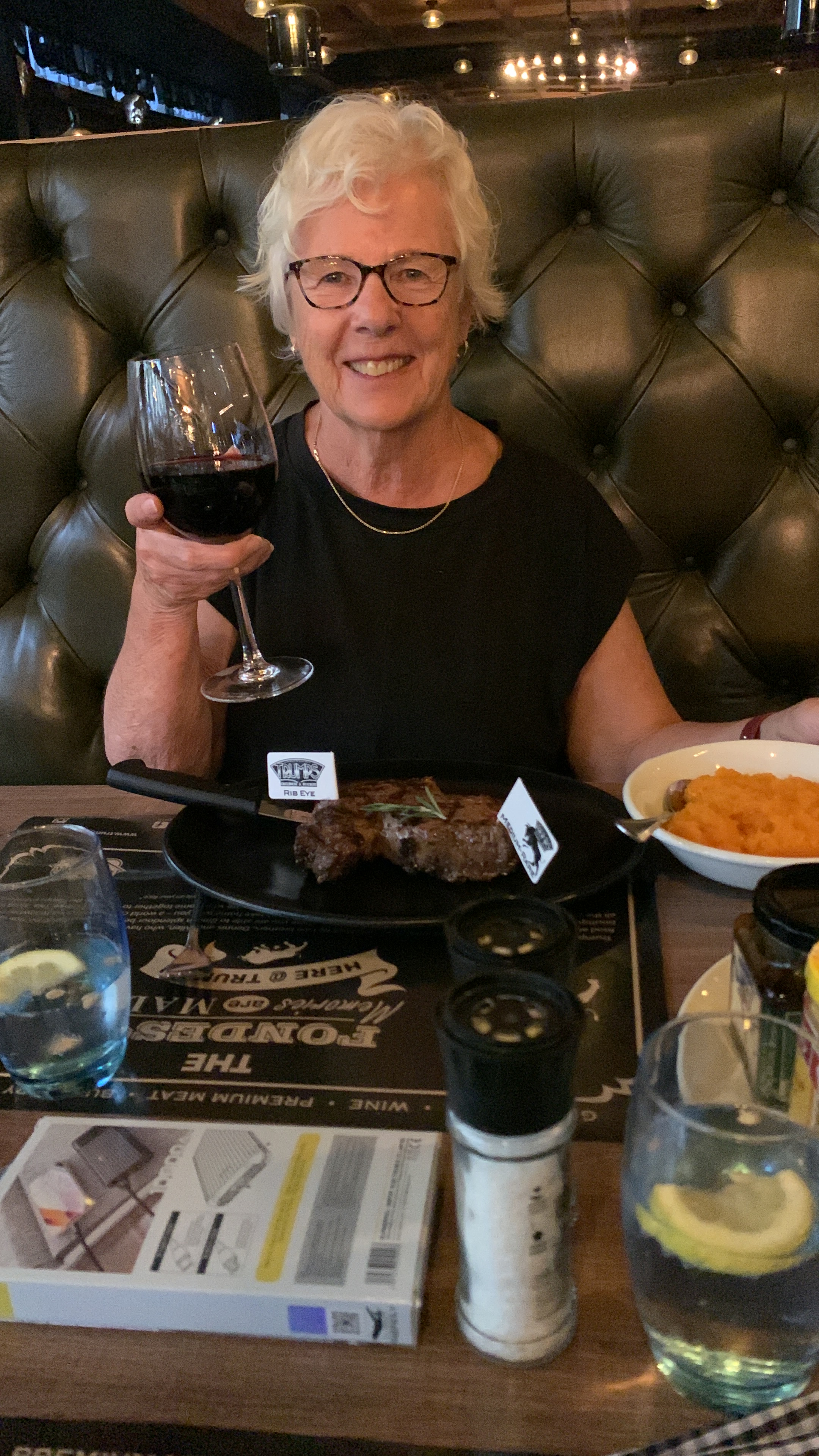
So to cap our visit to Johannesburg off we had to visit this very famous steakhouse, Trumps Griil. Highly recommended by Vicki’s brother Brad who enjoyed it’s sumptuous menu when he would fly into O R Tambo International Airport, we had to try it. Located in the upscale business and shopping district of Sandton we sat down and chowed down on thick juicy steaks. I had a 600 gram rump steak, about 1.5 “ thick. Vicki a more modest 250 gram strip loin. We managed to take our time and eat it all.
We rolled into and out of our Uber at our hotel. Up early this morning for the 2 hour flight to Cape Town. We are here for the next week. I look forward to sharing the experiences of our last few days in South Africa.