
For hundreds, possibly thousands of years, First Nations people have been using Wascana Creek near modern day Regina for the hunting and processing of bison they had hunted; they collected and stacked the leftover bones in the belief that it would encourage the herds to return to the area. Called oskana ka-asasteki in the Cree language, it literally means “the place where the bones are piled”. Later European settlers would translate this directly into the name” Pile O’ Bones. In 1882, the CPR construction crews reached the area and the community was renamed “Regina”, Latin for Queen, in honour of Queen Victoria, by her daughter Princess Louise. Today Regina is a modern city of with an estimated population of more than 270,000 citizens and home of most everyone’s favorite Canadian Football League team, the Saskatchewan Roughriders.
After a night in Regina we continued our way west. Destination tonight is Medicine Hat. Along the way through southern Saskatchewan, the topography changes little; unless you have your eyes and your mind open. I/we have driven this route many times over the years. The last trip for me was in 2010 when I rode a motorcycle from Cape Breton Island to Nanaimo.
There are many interesting things to see. Just west of Moose Jaw and before you get to Swift Current or “Speedy Creek” as we used to call it, you come upon the Chaplin Nature Center. This area is known as the Chaplin Plain Landscape and consists of three lakes that provide refuge for resident and migratory birds. Chaplin Lake, Reed Lake and Old Wives Lake combined are one of the most important sites in North America for more than 100,000 migratory birds . Chaplin Lake is a large saltwater lake and home to the Saskatchewan Mining and Minerals company which is a major producer of commercial sodium sulphate. Huge mounds of the white salt can be seen. A good place for a bio-break.
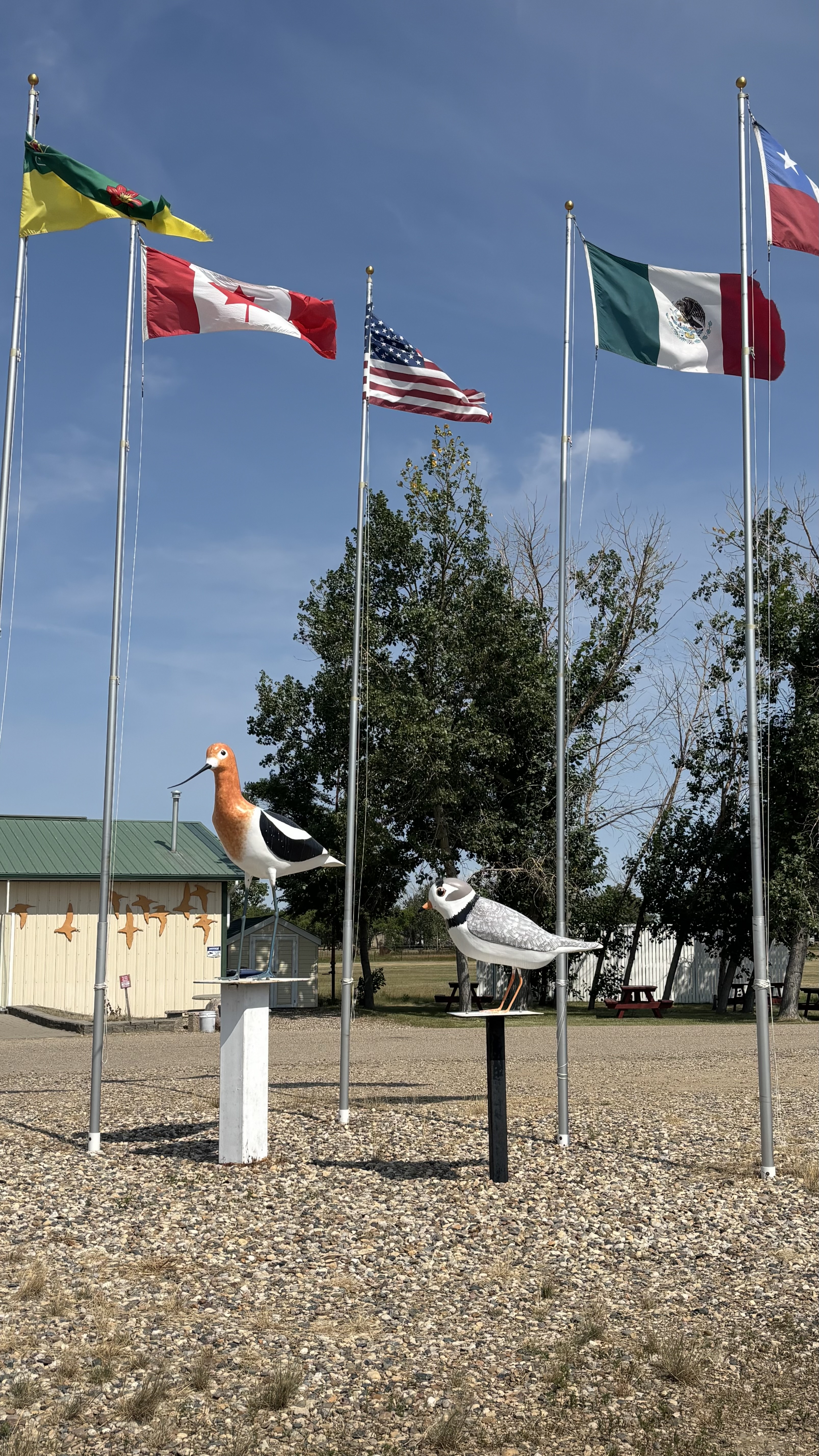
CHAPLIN NATURE CENTER
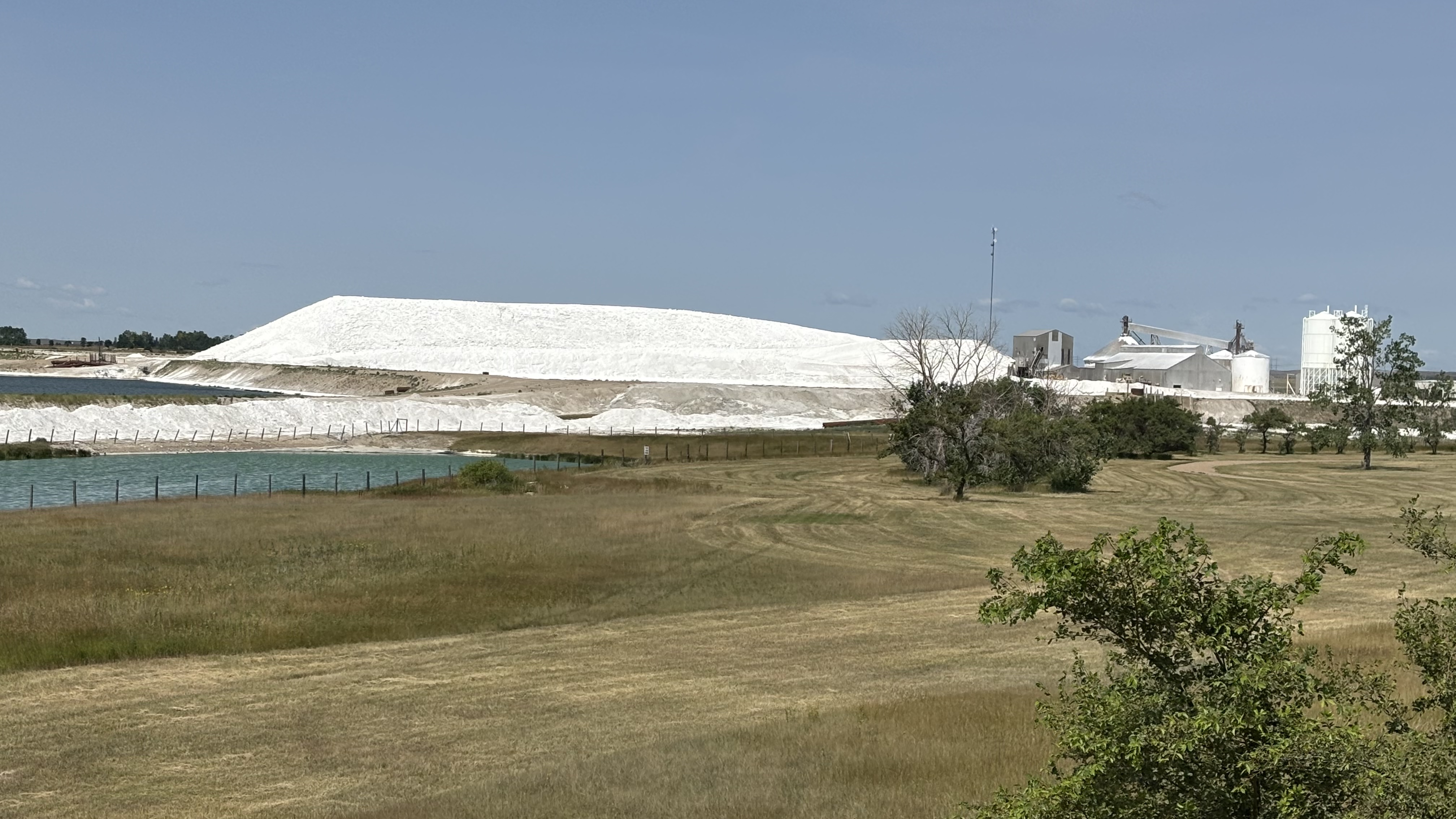
SODIUM SULPHATE MINING NEAR CHAPLIN SASK
One thing that is missing from the landscape is the iconic prairie grain elevator. These have been replaced with massive steel grain bins or towering concrete silos. Not much character is modern farming.
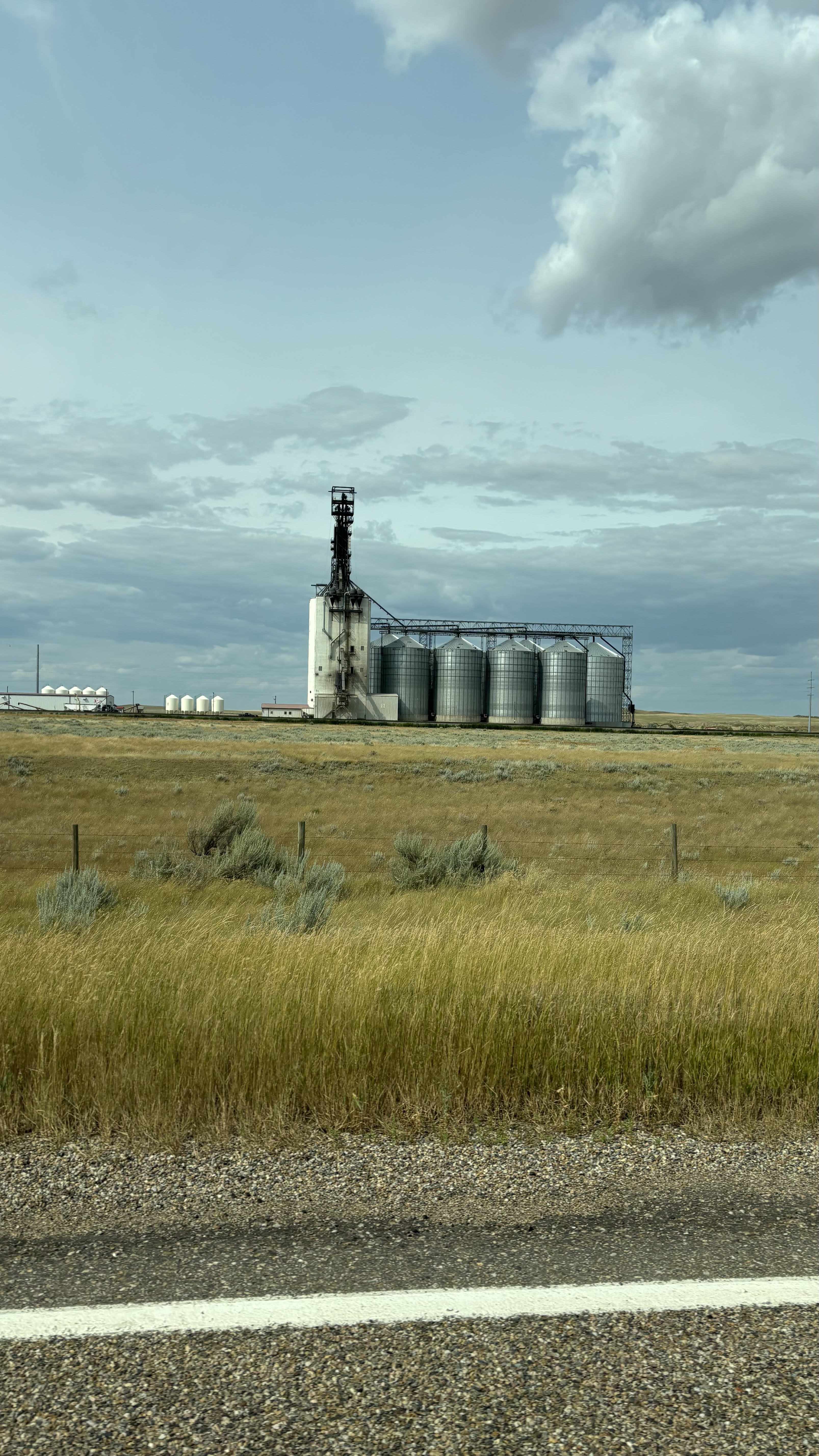
MODERN GRAIN BINS AND ELEVATORS
As we approach the Alberta border we see expansive solar arrays. Thousands of panels cover the fields. Cities and towns along the TCH in southern Saskatchewan consistently rank among the highest in Canada in average annual hours of sunlight. Estevan at 2,502, Swift Current at 2,411 and Regina at 2,374 hours of sunlight per year provide amble energy for the operation of these solar farms.
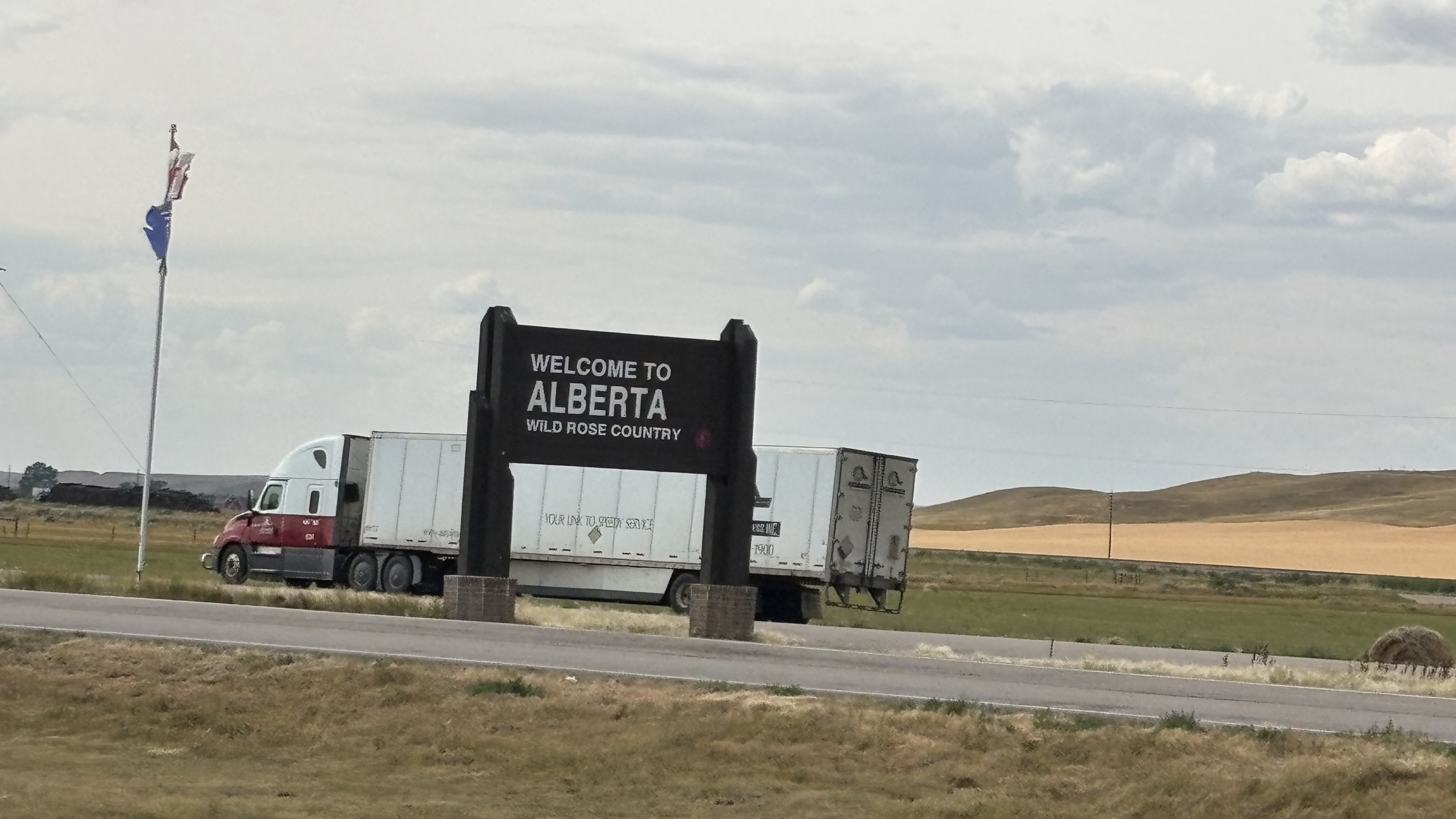
ONE DAY PERHAPS A FENCE AND A CONTROLLED ENTRY POINT?
Once into Alberta a more traditional form of energy becomes evident. Pump jacks, pumping black gold into the coffers of energy companies and provincial and federal governments. And they all seem to be operating. At around $63 per barrel for Western Canadian Select, why not?
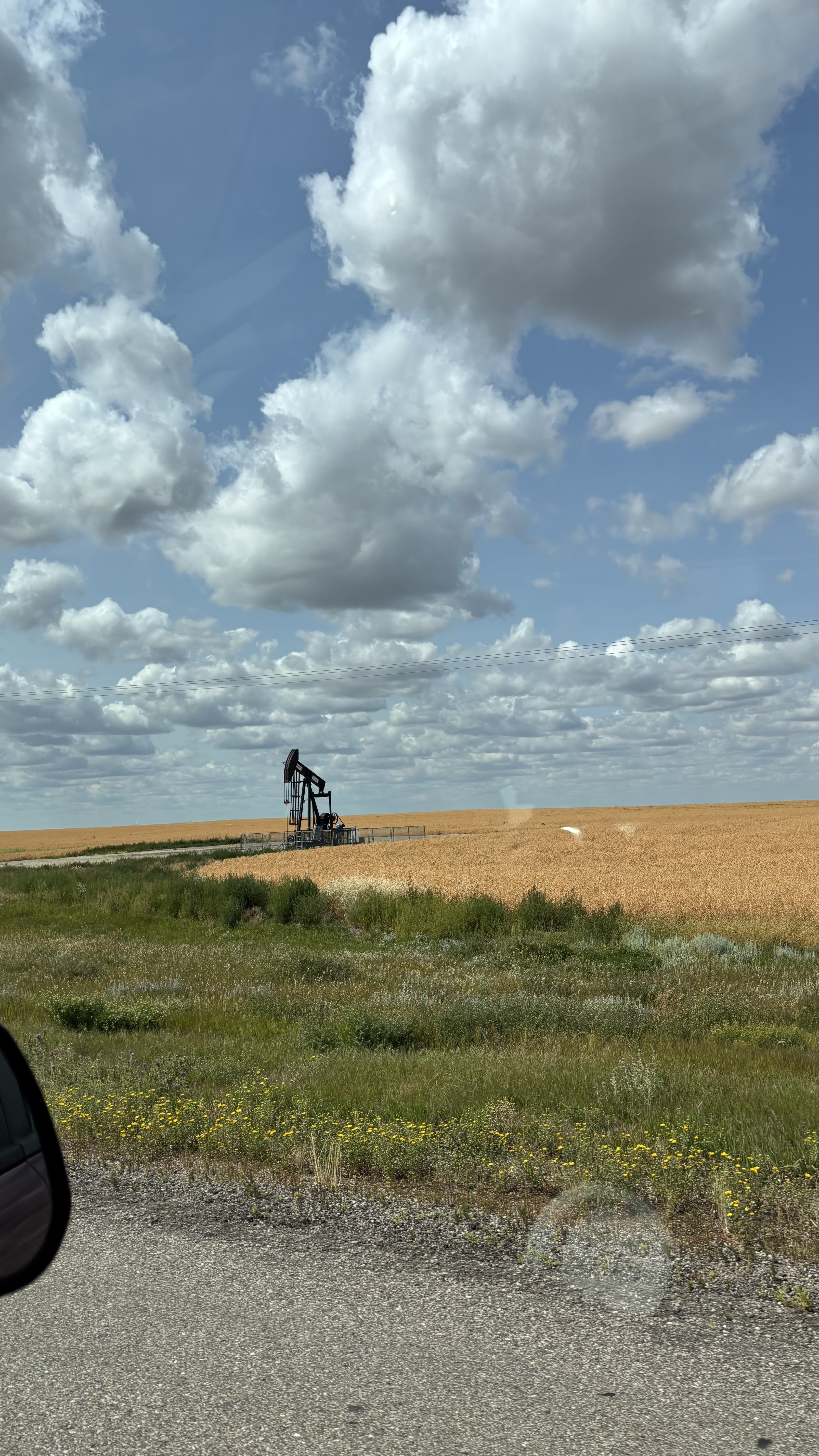
BLACK GOLD IN THEM THAR HILLS AS WELL
At one point I espied an innovative and somewhat ironic use of a small solar array. The electricity produced by the panels seem to be powering the nearby pump jack.
On we go to Medicine Hat for the night. Again, the area had been used for millennium by First Nations people and was known as Saamis or “Medicine man’s hat”. The name makes reference to the Blackfoot legend of the “Holy Bonnet” where a young tribe member saved his people from a devastating famine. The modern settlement was founded in 1883 when the CPR arrived and a camp was set up for the workers building the bridge across the South Saskatchewan River. That same year, while searching for water, drillers accidentally discovered a vast reserve of natural gas. Now known as “Gas City” it was once home to brickworks, glass factories and potteries due to the local clay deposits.
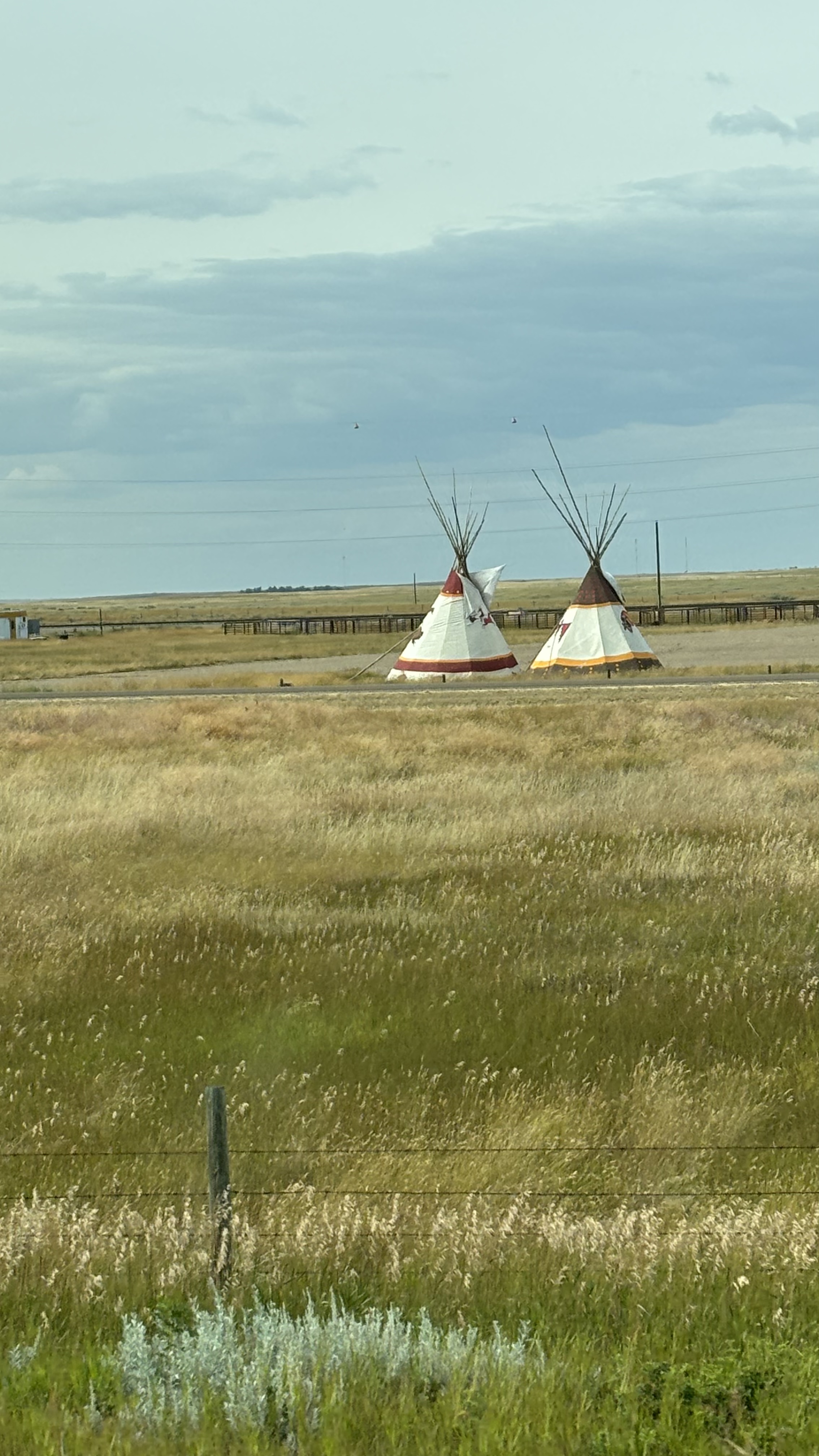
SAAMIS TEEPEES
The next day we arrive in Calgary for a short visit with our daughter Lindsay and then off to southern Alberta for the weekend at her RV in Glenwood, a small hamlet near Pincher Creek and Waterton National Park. Stay tuned for my next epistle about the weekend.

